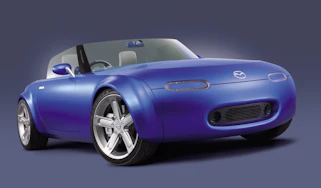
Mazda MX-5 review – the last surviving affordable sports car
The MX-5 is the perfect antidote to big, heavy, electrified performance cars – and tweaks to the current version have made it better than ever
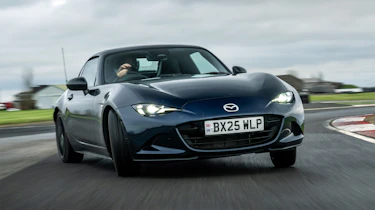
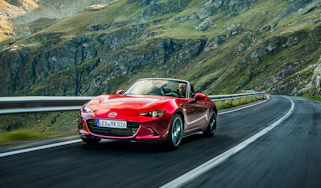
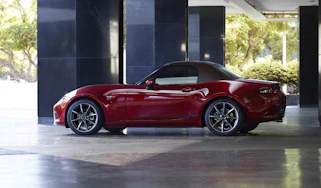
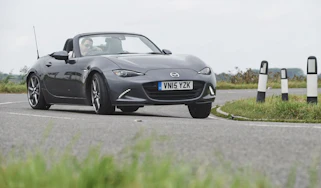
The current Mazda MX-5 is one of very few new cars that seems to get better with age. Now as in 1990 when the MX-5 first launched, it remains a tiny, lightweight, two-seat roadster with a naturally-aspirated engine, setting itself apart from current trends towards ever more powerful, complex and heavier cars. It’s a sports car distilled down to its bare essentials, with enough usability thrown in to maintain its wide-reaching appeal as the world’s most popular roadster.
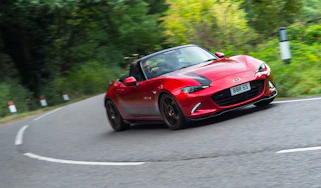
The current ND was launched in 2015 and on the surface, the formula has barely changed since the original NA arrived and rewrote the affordable sports car formula. In terms of dimensions it's actually shorter than the original (albeit wider), it weighs a little over a ton and generates modest power. Two engines are available – a 1.5-litre or 2-litre four-cylinder – and neither give the MX-5 an eye-catching turn of pace, but raw numbers have never been a guarantee of driving thrills. The MX-5 is proof of that, bringing joy in how it delivers its potential, and how much you can actually use on the road.

As well as being a perfect refresher of what pure sports cars are all about, the MX-5 is the last truly obtainable one out there, costing just £30k in base form. Even better, updates in 2024 – including a revised differential and steering – elevated the ND to new heights, so much so that in our 2024 Car of the Year test, it tied for second place with McLaren’s near-700bhp Artura Spider. In terms of raw enjoyment, the MX-5 really can mix it with pretty much anything – read on to find out why.
History
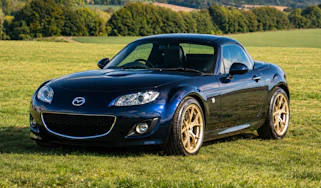
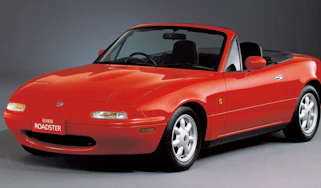
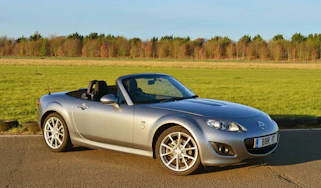
The MX-5 is one of the best-selling sports cars of all time, evolving incrementally in its 37 years but rarely at the expense of its core ethos of simplicity and light weight. MX-5 models are long-lived, too, with only four generations spanning its tenure: the NA running from 1989 to 1998, the NB running from 1998 to 2005, the NC running from 2005 to 2015 and the ND carrying on the lineage from 2015 to date.
More reviews
Group tests
Reviews
- Rocketeer Mazda MX-5 review - the 340bhp V6 sports car you never knew you needed
- Performance Link Mazda MX-5 R300 review – an MX-5 with Honda VTEC power
- Mazda MX-5 RF 2025 review – evo Car of the Year 2024’s people’s champion
- BBR Supercharged Mazda MX-5 (ND) 2023 review – tuned 250bhp roadster driven
- BBR Supercharged Mazda MX-5 (NC) 2022 review – frenzied, affordable fun
- Mazda MX-5 R Sport 2020 review – floats like a butterfly, but stings like one too
- BBR Super 225 Mazda MX-5 review
The fourth-generation ND has been on sale for over a decade but a facelift has given it a refreshed look, an updated cabin, revised mechanicals and electronics, and crucially, negligible weight gain. In the 37 years since it launched, the MX-5 has gone up in kerb weight by less than 100kg. By contrast, the original BMW M5 is the weight of an MX-5 lighter than its modern day equivalent.
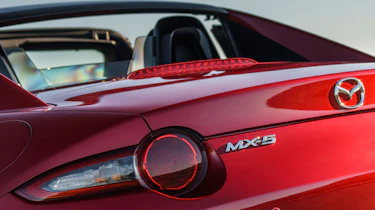
While the 2-litre version was undoubtedly the quicker of the two engines available from launch, the 1.5 was the more engaging drive due to the free-revving nature of its engine. In the latter part of 2018, heavily revised engines came on stream, the 2-litre gaining more power and a revvier character. The 2-litre car is the most driver focused, having a limited-slip differential and being available with uprated Bilstein dampers, although the raspier and more compliant 1.5-litre version plays to the car's natural strengths well.
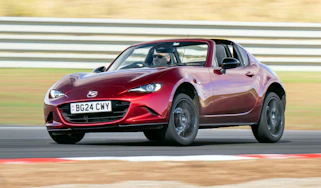
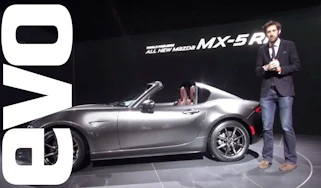
For those who insist on a tin-top there is also the MX-5 RF with its electric folding targa-style roof, which adds the looks of a coupe and some semi-exotic buttresses but retains many of the roadster’s attributes and quirks.
Engine, gearbox and technical highlights
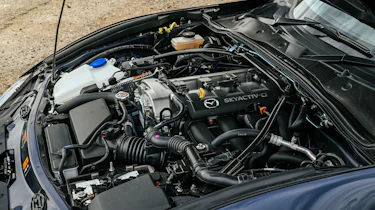
- 1.5-litre and 2-litre engines
- Asymmetric limited-slip differential for the 2-litre
- Still compact and lightweight
The 1.5-litre motor weighs 14kg less than the 1.8 MZR unit that powered the NC MX-5. While also used in the (now discontinued) Mazda 2, for the MX-5 it features revised cam timing, lighter rotating parts, a custom steel crankshaft and new intake and exhaust systems, while retaining a 4-2-1 exhaust manifold.
The base 1.5-litre MX-5 comes in at just 1031kg (2-litre cars weigh an extra 22kg). With peak power of 129bhp generated at 7000rpm, it’s an engine that needs to be worked hard, but as long as your performance expectations aren’t set too high it has plenty of appeal, with an effervescent character and a slightly more free-revving nature than the 2-litre.
The current 2-litre underwent a substantial update on the previous unit, with nuanced and detailed revisions such as weight savings to the pistons and conrods, revised camshafts, exhaust valves, injectors, throttle valves and a new intake. As a result the current 2-litre has some of the 1.5’s crisp response and willingness to rev (the redline is 500rpm higher than before), as well as a more substantial 181bhp power output. That compares to just 130bhp for the smaller engine, and there’s a similar gulf between the torque figures – 151lb ft plays 112.
The extra performance available from the 2-litre is notable in feel and on paper. It reaches 62mph in 6.5sec – a 0.4sec improvement over the previous 2-litre model, and 1.8sec quicker than the 1.5. Its 136mph top speed is 9mph faster than the 1.5’s, too.
Being heavier it’s no surprise the RF is marginally slower than the soft-top version. The extra 40kg that the 1.5 RF carries around means it accelerates from 0-62mph in 8.6sec – 0.3sec slower than the regular car. It feels slightly less urgent in the real world, but overall performance is similar. Needless to say, no MX-5 that’s as it left the Hiroshima plant will stand out in the Top Trump arena of acceleration times and top speeds.
Both engines share the same six-speed manual transmission, which has a wonderfully short, mechanical action. Directly poking straight out of the transmission, there’s an acute physical connection between the gearbox and your left hand, passing through vibrations and movements as the whole powertrain wobbles on its mountings.
The range-topping MX-5 is the Homura, complete with Bilstein dampers and an asymmetric limited-slip differential, installed as part of the 2024 update. This features a cam mechanism on the conical clutch that varies limiting force depending on whether the car is accelerating or decelerating. The steering has also been revised for improved feel and reduced friction.
Performance, ride and handling

- Wonderful delicacy, balance and purity
- 2-litre is brisk enough but by no means rapid
- New diff and revised steering improve feel and adjustability
The MX-5’s lightweight chassis and small footprint mean the 2-litre models feel brisk in a way MX-5s seldom have. The 1.5’s performance differs more than the numbers suggest, feeling revvy and fun, but noticeably less grunty when cruising. The 1.5-litre car needs working. In a nod to classic MX-5s, it's particularly noticeable on steeper hills when you'll need a downchange to maintain momentum, unlike the 2-litre car which charges up unhindered.
Working the gearbox is a pleasure in itself though, and while the 1.5-litre motor doesn't thrill for outright speed, the 2-litre doesn't either. Earlier 1.5s had a fantastic, rasping exhaust note which tipped things in their favour compared to the larger engine, but in the latest model both units sound similar. That is to say, revvy and enthusiastic but far from inspiring – an aftermarket sports exhaust or induction kit would be the first change we’d make.
This ND MX-5 was the first of its ilk to use electric power assistance for the steering, and while accurate, it didn’t possess the more natural weighting and progressive responses of the best hydraulic racks. Steering sensations have greatly improved across its lifespan though, the new car having a more precise feel with more positivity around the straight ahead, with less friction.
The 2-litre won’t slide around extravagantly in the dry, but if you’re committed enough, or on a circuit, it’ll happily transition into oversteer at speed with a combination of throttle and momentum. Holding it in this state requires lots of power to keep the rear tyres spinning and the revs up high where the engine gives its best. Truth be told, the MX-5 isn’t a natural hooligan in standard trim – it’s more about enjoying subtle angles, and the feeling of load and grip shifting across the axles.
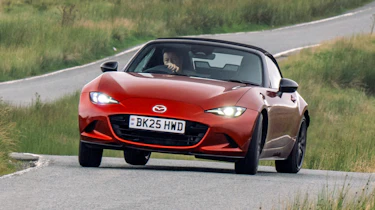
On unfamiliar back roads, where you aren’t confident of the severity or direction of the next corner, where you need a car that will respond just as you expect, the MX-5 is in its element. Without committing to a corner too eagerly you can get on the throttle early to manipulate the rear and constantly adjust your line right through to the exit. The new asymmetrical limited-slip diff gives wider scope to explore this balance, with excellent controllability right up to and over the limit.
Track Mode for the DSC – added in 2024 – allows you to enjoy this adjustability while retaining a safety net at the very extremes. It’s a helpful tool but given how honest and approachable the handling is, it’s not a huge leap to turn the systems off entirely. On track, you’ll be nanny-free within a lap or two in dry conditions.
Bilstein dampers are standard on the top-spec 2-litre Homura version, which is as serious as factory-spec MX-5s get. They do make for a firm ride at low speeds, which can send light tremors through the structure in town. The fancy dampers provide more control and allow you to drive the MX-5 harder at speed, while still allowing you to enjoy many roads that would test the bump stops of many heavier performance cars. Thankfully, the brakes are easily up to the task on the road, with a measured (if not outstanding) initial bite.
Mazda has gone to great lengths to make the RF feel the same as the roadster to drive, and it does for the most part. The extra weight of the folding roof has been compensated for by using revised springs, dampers, anti-roll bars and rear suspension geometry, and there’s a similar feeling of agility and feedback between the two. However, the RF is noticeably less fluid in terms of its ride, and more easily disturbed by road imperfections, making the Roadster that bit sweeter overall. The soft top is less susceptible to turbulence with the roof down, too.
Driver’s note
‘I had one of the best drives of my life in the Mazda. It was so biddable, so adjustable and so light on its toes I barely used the brakes. It was half an hour of utter joy.’ – John Barker, evo Editor-at-Large
On track
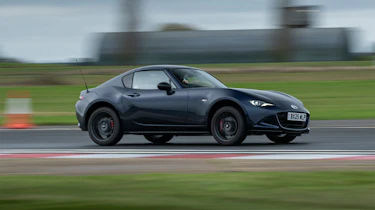
On paper the MX-5 has all the right ingredients for a track car – low mass, a revvy engine, rear-wheel drive and a sweet manual gearbox – but in terms of its setup, it’s very much geared towards road use. It’s softer than most sports cars and more light-footed, with modest amounts of grip. This means it’s not a car you attack with, but flow from corner to corner with economical inputs to maintain your momentum, which is satisfying in itself.
Those traits also make the MX-5 fantastic for honing basic car control skills. The softness of the suspension means the effects of weight transfer are amplified, making it your job to keep things smooth and keep the car settled. For example, in fast corners it's better to lift early and roll speed through the apex, rather than braking late and aggressively, which makes the car unstable and sheds your hard-won momentum.
Get it right and the MX-5 is really rewarding, minutely adjustable with the pedals as much as the steering wheel, and capable of imperceptible historic racer-style four-wheel drifts. Slower corners provide an opportunity to feel the effects of the limited-slip diff, which finds good traction and gently swings the rear out under hard power.
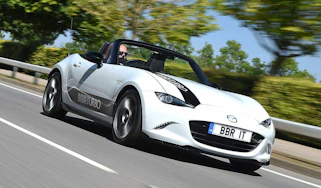
On track where you live at high revs the engine’s lack of torque isn’t as noticeable as it is on the road, but even so, it does feel gutless on a wide open circuit – a visit to BBR for one of its forced-induction upgrades would make things more exciting, and work the chassis harder. With that said, the standard drivetrain is still sweet to use, the engine revvy and responsive, the gearbox allowing quick shifts and easy rev matching.
For track use the standard brakes are a weak point. The pedal can soften with hard use and the standard pads can wear thin after a full day’s running. Uprated pads and high performance fluid would be our first upgrade before using an ND on track. After that, the sky’s the limit – there are various established tuning outfits that can trade the MX-5’s delicacy for a more aggressive, exciting, grippier character, as well as adding more power.
Interior and tech
- Physical controls remain
- As do the snug interior dimensions
- USB-C and Apple CarPlay on a new screen modernises the MX-5
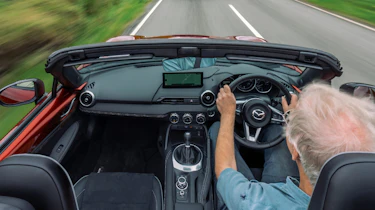
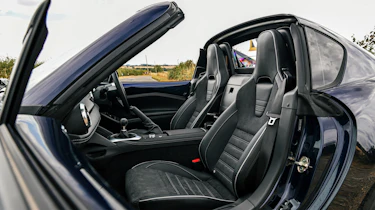
The MX-5’s interior has always been a squeeze for taller drivers. The last-gen NC improved things somewhat but the smaller, lighter ND is definitely back to being a bit more cramped than you’d like. The cabin is both quite narrow and short, meaning drivers with generous proportions in either direction will find the MX-5 a little challenging. Approaching 6 feet tall and want to wear a helmet for track work? It’ll be a roof down affair, unless you want to tilt your head.
The seats are a little too high in relation to the rest of the cabin, which exacerbates the issue (although optional Recaros do help). Once inside and settled, the cabin design is a marvel of ergonomic common sense, especially in context of the touch-based, heavily digitised interiors of most modern cars. There’s physical hardware to operate major controls and for the most part, everything is located where it should be.
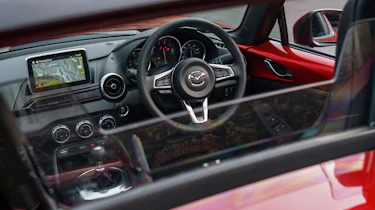
On the move, the experience inside is dominated by two elements. The first is the perfectly round, thin steering wheel that feels great in the hands, even if it does seem a bit on the large side. The other is the three clear and perfectly placed dials in front of you. The left-hand dial is one solid colour screen in high-specification models, and although it doesn’t have a huge amount of functionality, it re-emphasises the work Mazda has been putting into its detailing.
The latest car’s infotainment system is also good – not as sophisticated as the very best units out there, but perfectly intuitive and feature rich for a small sports car. The 8.8-inch display thankfully still uses a physical rotary controller, with touchscreen only working when stationary. CarPlay and Android Auto are standard if you want to bypass Mazda’s interface, too.
A higher-res screen in the dash would be welcome, but as the MX-5 is now one of the older models in Mazda’s range, it’s not surprising that its hardware and software isn’t at the absolute cutting edge. At this point, the analogue dials, as with the dynamics, are a refreshing change of pace.
All MX-5s are well finished and solidly screwed together, with the entry-level Prime-line model trimmed in black cloth which can be upgraded to leather in Exclusive-line trim. The top-spec Homura gets leather and Alcantara Recaro sports seats and stainless steel sill plates.
Mazda MX-5 2.0 long-term test
By Sam Jenkins, evo issue 317

Twelve months and almost 8000 miles since we were handed its key, it's time to wave goodbye to our MX‑5 long-term test car. This 2-litre model is actually the fifth Mk4 MX-5 we’ve run at evo, but we make no apologies for sporadically returning to this generation of Mazda’s roadster as it steadily evolves, because while there are cars that are much more capable and considerably more practical, the MX‑5 offers an all-round package that very little else can match, as our time with this one has confirmed.
Having become accustomed to my C63 AMG’s incredible long-distance comfort and torque-rich V8, jumping into an MX‑5 required a change of mindset. The low weight, peppy naturally aspirated four-cylinder and manual gearbox were no cause for concern, but I did have my reservations about using such a pared-back machine every day, particularly for longer journeys.
> Toyota GR86 v BBR Mazda MX-5: supercharged drop-top battles sports coupe
These misgivings soon vanished, though, as the MX‑5 charm quickly worked its magic. The appeal of the package’s simplicity is something that really can’t be overstated, with little more than a ‘DSC off’ button standing between the driver and the car in its purest form. And while it’s undoubtedly compact, the cabin suited me perfectly, its seats proving among the most comfortable I’ve sampled for long stints. In fact, there are full-size SUVs that I’ve found less comfortable…
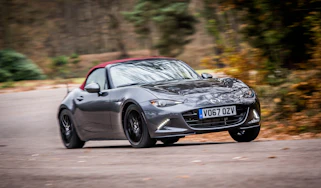
Despite VX22 KHE’s factory-fitted lowering springs and Bilstein dampers, ride quality was never an issue, either. The set-up allows for a surprising amount of roll, but this only makes the MX‑5 more capable, boosting grip (even in the wet) without compromising composure.
While a little underpowered in today’s world of 400bhp hot hatches, the MX‑5’s 181bhp engine is wonderfully pure, thriving on revs and offering truly accessible performance at all times. Too often we find it difficult to exploit modern performance cars on the road, but the MX‑5 doesn’t suffer the same fate. Drive near its limit and you’ll have little worry about falling under the wrath of the law, as you’ll still be travelling at sane speeds.

You also needn’t worry about significant damage to your bank balance. Economy is hardly a key evo metric, but even though I very rarely drove the Mazda for efficiency, I still never saw the mpg average fall much lower than the mid-40s – quite incredible given the entertainment on offer, and a testament to the car’s small frontal area, low weight (1073kg on our scales) and skinny tyres.
That minimal mass also proved its worth through the lack of maintenance required during our time with the car. Granted, a 10,000-mile odometer reading isn’t high, but with KHE having seen considerable track use in our hands and having endured numerous tests while on Mazda’s general press fleet before that, it’s held up well. Short drives, thousand-mile road trips to Europe and plenty of winter driving in snow and ice aren’t easy on any car, but the MX‑5 took it all in its stride. A recent check-up noted only minor brake wear, but this didn’t require immediate action. Such light use of consumables combined with unwavering reliability is a combination that’s not to be sniffed at.
So despite my love for exotic powertrains, cutting-edge tech and sumptuous GTs, the MX‑5 will be a car I sorely miss. In fact, if I hadn’t taken the plunge on the C63, I suspect I would be considering spending my own money on one. Unlike many of its kind, the MX‑5 looks to be sticking around for some time yet, but when its final day eventually comes, it will be a particularly sad one.
| Date acquired | July 2022 |
| Duration of test | 12 months |
| Total test mileage | 7807 |
| Overall mpg | 43.1 |
| Total costs | £192 (service) |
| Purchase price | £32,430 |
| Value today | £22,300 |
Prices, specs and rivals
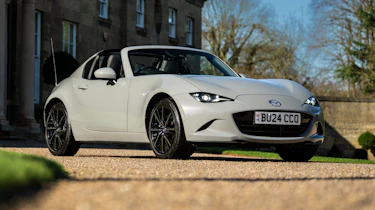
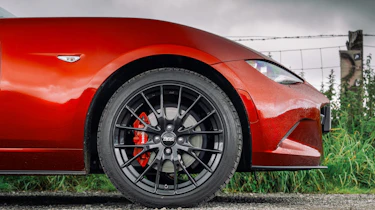
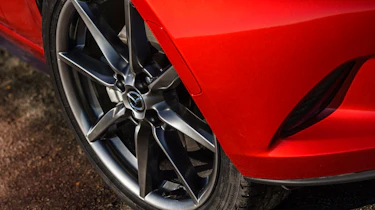
In entry-level Prime-Line spec with the 1.5-litre engine the MX-5 costs £28,605, rising to £30,605 for the Exclusive-Line. The 2-litre is only available from Exclusive-Line spec at £33,565, or in the top-of-the-range Homura for £36,065. The latter is 2-litre only and comes with 17-inch BBS alloys, red Brembo calipers and Recaros trimmed in leather and Alcantara. The folding hard-top RFs jump in price by around £2k spec-for-spec, starting from £30,605 for a 1.5-litre Prime-Line and rising to £38,065 for the top-spec Homura.
Prime-Line, in spite of sitting at the bottom of the range, gets Apple CarPlay and Android Auto as standard via the new 8.8-inch multimedia touchscreen, plus a pair of handy driver's headrest speakers for hands-free calls. Exclusive-Line gains an uprated nine-speaker Bose sound system, leather seats, silver 16-inch wheels and more driver assistance systems with a Track Mode for the Dynamic Stability control.
With Toyota’s brilliant GR86 having been off sale for some time, the MX-5’s sub-£30k asking price makes it the last truly affordable sports car on sale – and compared with earlier models, surprisingly good value. When the Mk1 arrived in the UK in 1990, it cost £14,250 in its most basic spec with a 115bhp 1.6-litre engine. Allowing for inflation, that’s £35,300 in today’s money.
Used Mazda MX-5 (Mk4 ND, 2015 to date) buyer’s guide
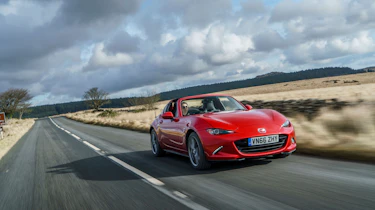
The ND MX-5 makes a great used purchase. It’s reliable and cheap to run, and despite having been around since 2015, the shape still looks fresh and there are plenty of used examples to choose from – this is one of the world’s most popular sports cars, after all.
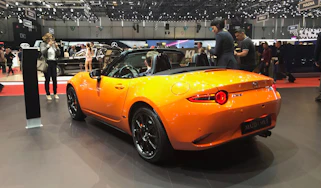
If you’re after a no frills model then the 1.5-litre models make an excellent case for themselves, but for a little bit more performance a post-September 2018 2-litre would be the one to go for. Special-edition models – the 30th Anniversary is a favourite – are particularly desirable and hold their value very well. Prices range from under £10,000 for early 1.5s with a few miles to c/£15k for a nice later 2-litre car.
Range, specifications and options
The MX-5 range used to be more confusing than it is today, consisting of SE (1.5 only), SE-L, SE-L Nav, Sport and Sport Nav. The entry-level SE had cloth trim and basic infotainment, while SE-L added climate control, DAB and a colour touchscreen. The addition of Nav to the model name signifies the inclusion of a navigation system, while Sport models feature a limited-slip differential and Bilstein dampers.
If you like the idea of some modern safety-related equipment then a post-September 2018 model is the one to go for. Three new trim levels were added at this time – GT Sport Nav, Sport Tech and GT Sport Tech. Most of the higher-end models have lane departure warning, smart city braking and various other driver aids. As above, the latest MX-5 range has now been rationalised with a three-grade lineup.
Both the roadster and RF are available with the 1.5- or 2-litre engines and a six-speed manual transmission, with a six-speed paddleshift auto also offered with the RF.
Problems checks and recalls
Mazda has a pretty good reputation for reliability and this applies to the MX-5, with no significant problems to report with regard to engines and transmissions. The MX-5 is a lightweight compared to most modern cars so tends to be fairly gentle on its tyres, brakes and suspension, but the oldest examples are getting to the point where age-related deterioration might be an issue. Shock absorbers can start to weep, suspension bushes can perish and brakes can wear, while calipers can stick, especially on lower-mileage cars that don’t receive much use.
Check the hood carefully as there is a known problem, particularly with 2015 and 2016 cars, where the inner lining can become detached – this looks unsightly and can obscure the view through the rear window. There was a service information bulletin from Mazda for the official fix for the problem.
There have been a couple of recalls on this generation of MX-5 – an undershield metal bracket may come adrift, automatic models may experience a fault with unexpected downshifts, the fuel pump impeller can deform and there’s a potential fault with the vehicle’s charging system as well. These refer to cars built between 2015 and 2018, with those built from 2019 onwards not needing any safety related recalls.