Best cheap supercars – Porsche 911 money buys these used exotics
New cars are more egregiously expensive than ever, making a silver-haired supercar for hot hatch money extraordinarily tempting
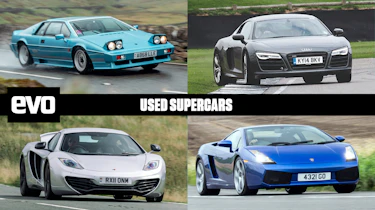
Supercars have gotten expensive, to a price point we used to associate with hypercars. Remember when £300,000 was considered exorbitant for a new Pagani Zonda? That’s now about what you’ll pay for a Ferrari 296 Speciale, a car below the 849 Testarossa and the F80 hypercar in Modena’s lineup. So the question is, how do you get the supercar experience without paying what the new car market demands for it? You look to the Ferrari F430 and McLaren 12C for half, a third or even a quarter of the price of a 296 GTB or 750S.
For no more than the price of a new 911 Carrera GTS, you can own in all totality some of the greats of the last decade and a bit. Some pseudo supercars – exotic slayers of their day – and even some bonafide thoroughbreds, are out there for hot hatch money. Let’s count them down.
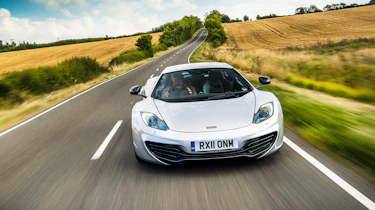
McLaren 12C/650S
Prices from £60k-£100k
See also: McLaren 570S, 570GT, 600LT, 720S, GT
McLaren is a pillar of the supercar firmament these days, 15 years on from the MP4‑12C’s (later renamed simply 12C) debut as the brand’s first foray into road cars since the hallowed F1.
Its hi-tech, highly configurable pursuit of high performance marks it out as a progenitor of today’s breed of bleeding-edge supercars. It’s not a classically handsome car, the 12C, but it demands your attention. Under the skin was the now ubiquitous MonoCell carbonfibre monocoque, hanging from which the trick double-wishbone suspension that coupled coil springs with hydraulically interconnected dampers that allowed the McLaren to do away with traditional anti-roll bars. And there’s no limited-slip differential: instead, a Brake Steer set-up that brakes individual inside rear wheels for better turn-in.
Power came from the twin-turbocharged 3.8-litre V8 M838T, which was developed in collaboration with British engineering firm Ricardo. Like the MonoCell, this unit has been a constant throughout the McLaren line-up, albeit in increasingly modified forms. In the early cars it developed 592bhp and 442lb ft of torque, while from 2012 onwards power was raised to 616bhp, with torque unchanged. Once the 650S took the 12C’s place, the mill was up to 641bhp and 500lb ft – monster figures even by today’s standards, 11 years on from its introduction.

Regardless of output, you get the same ‘seamless shift’ seven-speed twin-clutch gearbox. There are also separate Normal, Sport and Track settings for the chassis and drivetrain, allowing you to pick and mix your favourite combination.
Given their potency, technological and visual appointment – you don’t get much more ‘supercar’ than a carbon tub and butterfly doors – it’s astonishing that these incredible cars start (in MP4-12C form) from £60k, with the much more accomplished, solidly-built 650S starting from £100k. And it’s not just the 12C and 650S. Even the eCoty-winning 600LT represents astonishing good value on the used market and even a 720S can be had for 2026 Carrera S cash.
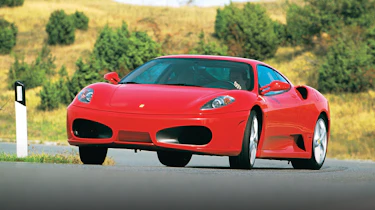
Ferrari F430
Prices from £80k (F1 Spider)
See also: Ferrari 355, 360, 458, California
The F430 debuted just seven years before the MP4-12C, but drive the two back-to-back and the gap could be decades. Make no mistake, the F430 marked a major technological step for the Prancing Horse, giving drivers the first taste of the manettino and the electronically controlled E-Diff, plus there were adaptive dampers and the option of a semi-automatic transmission, but on the road the F430 feels like a car designed when chassis development relied on analogue feel rather than sophisticated algorithms. It’s way slower than the McLaren, but the rewards it delivers are way greater.
Loosely based on the 360 Modena, the 430 represented a big leap forward for Ferrari. Not only was it endowed with the latest electronic aids, it also marked the debut of the F136 V8 that was developed in partnership with Maserati. Featuring a 4.3-litre capacity, a flat-plane crank and four valves per cylinder (the old 360 had a five-valve head) it develops 483bhp at a heady, heavenly 8500rpm.
A six-speed manual was standard (for the last time on a mid-engined Ferrari) but most got the single-clutch F1 paddleshift, as fitted to this car. Treat it like a modern twin-clutcher and, frankly, it’s hopeless, the ponderous delay between shifts causing nodding-dog syndrome. Learn to give a small lift off the throttle between changes, however, and you can smooth the process nicely – it’s no faster, but it adds a layer of interaction that other autos can’t match. And all for what Audi charged for the RS3 Competition Limited – astonishing.
Audi R8 V10
Prices from £40k (R-tronic)
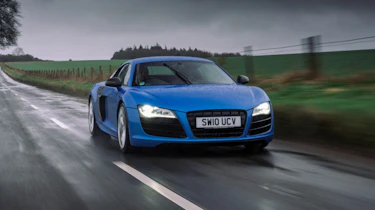
Audi’s R8 has always been something of an interloper. Especially the 518bhp, 5.2 V10 FSI, which combined a truly exotic powertrain with reassuring Teutonic sensibilities and the ruthless resolve so typical of the Piech-led VW-Audi Group of the day.
Born from brand ambition and realised through sheer engineering might, it was an instant icon. In earlier times it could have become one of those dynastic 911-esque models that morph through generation after generation. Instead, thanks to the forced transition from ICE to EV, the R8 has been cut off in its prime.
Rare, hand-built, mid-engined supercars with mega naturally aspirated engines and manual transmissions are rightly revered as the apex of the analogue driving experience. Until the second-gen cars, all R8s were quattro four-wheel drive. Manual V10s are far more abundant than their Italian equivalents, yet the R8 remains a rare car. It says a lot for brand snobbery/petrolhead psyche that they are much more affordable, with manual R8 V10s available for less than £70k.
So how is it that V10 stick-shift R8s can be had for little more than new Golf R money? Snobbery. Lack of kudos. Lack of investment potential. For whatever reason, as much as the R8 excels as a supercar it has struggled to overcome the burden of its bread-and-butter badge.
Lamborghini Gallardo
Prices from £65k (E-gear 5-litre)
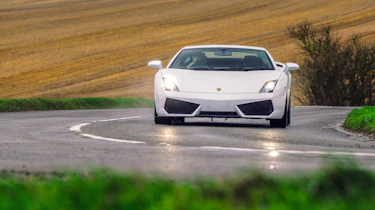
The idea of a baby Lambo wasn’t new at the time of the Gallardo’s debut. Rather Lamborghini’s entry-level V10, shorn of two cylinders and its scissor doors, was only the first of a few attempts that actually made it to production. Before it, the Cala concept of the 1990s hinted at what was to come, V10 engine included. Before that, the L140, which was set to take the place of the V8-engined Jalpa but never came to fruition. It took German minds to make the concept of smaller, cheaper, less frenetic Lamborghini make sense.

Over 14,000 units later, its genius was proven, doubling the number of Lamborghinis in existence altogether, all on its own. First arriving as a 492bhp 5-litre V10 with a manual and a single-clutch automated gearbox option, the Gallardo received a number of upgrades throughout its life. Capacity jumped to 5.2-litres as power jumped over 500bhp. There was a soft-top Spider and a more focused Superleggera, before the cleaner, more powerful, less exotic-sounding LP560 and LP570 facelifts took over.
The later 5.2-litre V10 of the LP560-4 doesn’t quite have the snarling, grungy vocals of the original Lambo-powered 5-litre, but it still booms out a barrel-chested soundtrack as befits a car that develops 552bhp at 8000rpm. The E-Gear ’box requires some patience if you’re to get on with it. Soft-shoeing the upshifts helps, but not as effectively as in the Ferrari, and full-bore shifts in Corsa mode are a bit more violent. It’s as I remember Gallardos in period, so all part of the authentic experience, but also a reminder that these single-clutch gearboxes were always work-in-progress, and why they ultimately got dropped in favour of DCT hardware.
Styling has always been a primary point of difference between Ferrari and Lamborghini but so too has the driving experience. Rarely has that been better expressed than in the contrast between F430 and Gallardo. Brutally square-shouldered to the point of being brick-like, the Gallardo really is a magnificent piece of design. One that only looks better as time passes.
Ferrari 488 GTB
Prices from £126k
See also: Ferrari California T
Unenviable was the task of the Ferrari 488 GTB, in following directly the astonishing 458 Speciale and taking up the duties of the still wonderful 458 Italia, on which the screaming limited special was based. And it did so with a bit of a whimper, albeit at great speed. For the 488 was the beginning of Ferrari’s latterday turbocharged supercar era, lowering the revs (and decibels) but greatly increasing performance. The 458 Speciale went out on a high admittedly, its screaming 9000rpm, 4.5-litre V8 good for almost 600bhp. The 3.9-litre turbocharged 488 then blew it into the weeds, with an unheard-of 560lb ft of torque available from just 3000rpm. Well, sort of. Ferrari cleverly engineered the 488 with engine specific engine mapping for each gear, only letting the full lump of turbocharged torque loose once in seventh gear. The result was a turbocharged motor with the kind of crescendous performance you’d expect of a naturally-aspirated mill, if not the vocals.

Even so, this barrel-chested tyre marmaliser was simply another realm of fast compared to the frenetic, rev-hungry animals it succeeded. That doesn’t mean to say it was unwieldy. Ferrari made sure the monster mill was part of a cohesive whole and didn’t overwhelm the rest of the car. It’s controllable yet unexpectedly compliant. It’s precise and poised but not capricious. Between its deftly-judged adaptive dampers, lightning fast steering and Side Slip Control-equipped E-diff, you could play the 660bhp twin-turbo, award-winning nuclear bomb that was that V8, like a fiddle.
But the 488 can’t escape its place in history, as the car that directly followed what is perhaps Ferrari’s most beloved model of the 21st century. The plus side of course is that one of the best junior Ferrari supercars can be had for less than £150k, or otherwise known, the price of a 2026 911 Carrera GTS with a few choice options…
Maserati MC20
Prices from £120k
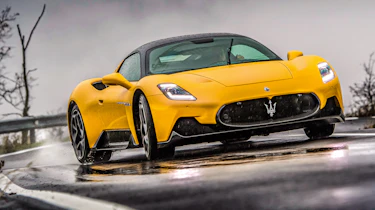
This one’s a little awkward, for what are perhaps obvious reasons. Here is a supercar Maserati will still sell you today (it’s only been on sale for four years) at a brand new price of over £230k, available on the used market for almost half that. Traditionally, the tectonic plate-shattering depreciation of Maseratis was well earned. They were cars that traded more on charm and style than dynamic chops and great engineering.
The MC20 bucked that trend. Right out of the gates the Trident gave us a supercar resolved to an eCoty-winning standard, with an engine that was as effervescent as it was innovative, the ‘Nettuno’ V6 deploying pre-chamber combustion technology for improved efficiency and performance, but with the aural forced induction theatrics of a Jaguar XJ220. That was bolted to the back of a carbon monocoque chassis and a dual-clutch transmission, which sent its 621bhp to the rear wheels.
But what could well have been a traditionally cantankerous supercar, was somehow honed into one ideally suited for the duty of delivering thrills on a wide variety of UK roads. It’s wieldy and biddable, yet exciting. It’s responsive, yet forgiving. It’s ferociously fast and enormously exotic, yet unintimidating to pilot. It’s an easy access supercar without sanitising the attitude or excess. In other words, it’s a jack of all trades. Except perhaps being lightweight. MC20s are bafflingly heavy for reasons we’ve yet to discern. Carbon construction be damned but happily, that 1500kg+ kerb weight figure does nothing to dampen the experience. For little more than 911 Carrera GTS money – especially given they’ve gone up over the last year – for us, it’d be an utter no-brainer.
Lotus Esprit
Prices from £19,995
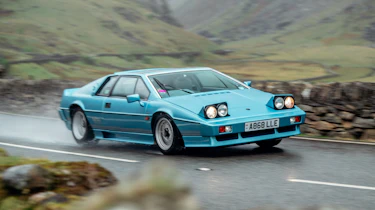
I did wonder whether adding the Esprit to this section rather than the one below was a good idea. After all, the 215bhp of the 1988 Turbo HC we found befits its hot hatch price of £19,995. But in period and especially earlier in its life, the Esprit Turbo was considered a supercar. That’s why we included it in our 1980s evo Eras: supercars test, alongside Ferrari’s Testarossa, Lamborghini’s Countach, Porsche’s 930 S 911 Turbo and more.
The earlier Turbos, especially with their traditional Giugiaro cues intact, still resonate as poster cars today and certainly, a pop culture icon as one of Bond’s most famous daily drivers. The Esprit remains a long-standing benchmark for mid-engined dynamics, as you’d expect of a Lotus. It’s far from a modern driving experience, with real turbo lag, and damping and unassisted steering that requires a more flow-like approach to the drive than frenetic modern performance cars. But it remains a true exotic – one that’s aged like a fine wine with time. And frankly, it’s unbelievably good value, with even S2s, S3s and V8s all in the £30,000-£60,000 range.
Four cheap pseudo-supercars
Porsche 991 Turbo S
Prices from £75k
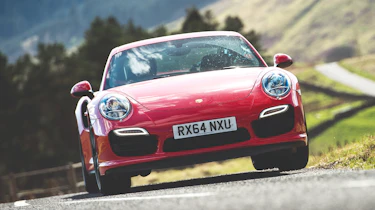
A few words on some fantastic not-quite-supercars, that offer some of the appeal and still at an accessible price, starting with the 991 Porsche 911 Turbo S, available for half what a new Carrera S costs. It’s always been the thorn in Ferrari’s side, the 911 Turbo. So fast, so capable, most 911 Turbos will romp past the contemporary Ferrari supercar of their day on most real world roads and that continued with the 991. With its broadened footprint, sophisticated AWD system and bombastic twin-turbo powerplant, a 458 or a 650S simply won’t keep up on many roads in the real world. The trouble is, like the last few 911 Turbos before it, it executed the job of inhaling miles with a cold, clinical precision with very little drama or theatre. And that can be seen as a bad thing.
All that performance, in a more unassuming package, with space for kids and your shopping. By rights, Ferrari and Lamborghini should be out of business and yet, such is the emotional nature of these things, a thorn and nothing more the Turbo was for the 991 generation, and so it remains to this day. Still, 0-62mph in under three seconds, 200mph flat-out and a design that’s hardly completely anonymous does appeal for under £80k.
Corvette Z06/ZR1
Prices from £40k-£80k
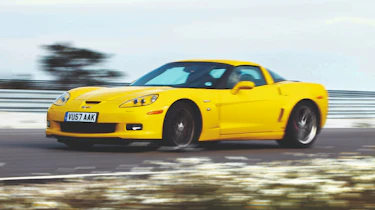
The Corvette has for a few years now, in certain iterations, been America’s pretender to supercar status. It started with the C6 Z06, which had the audacity to use carbonfibre bodywork, magnesium in its construction and pack 500bhp, all within an impossibly low and pretty (if a little garish) long-bonnetted coupe.
It might have been good for almost 200mph, with power to take the fight to the 911 GT2, F430 and Gallardo but the C6 Z06 didn’t forsake the Corvette’s time-honoured trump card: bargain pricing. Just £50k would buy you a Z06 new in the UK in 2006, less than the price of a basic 911 at the time. They’re around for less than £40k now. Still want that new Golf GTI, or do you want to go chasing Ferraris and the hallowed 200mph barrier on the autobahn? Got a bit more cash to burn? Then the even more powerful C6 ZR1 will potentially romp you up past 210mph, with its 638bhp supercharged LS9, suspended plushly on its MagneRide magnetic dampers. They’re rare but appear now and again for less than £80k. The catch with Corvettes as most will know, is quality. The fit, finish and material use matched the bargain basement pricing, with pickup truck parts bin switchgear and interior trim gaps to have your pinky finger off.
BMW i8
Prices from £25k (early coupe)
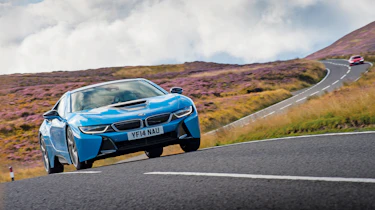
If the 911 Turbo is a little boring and the Corvette a little plasticky, what completes the trifecta of almost-supercars with core deficiencies? Why, the BMW i8 of course. It’s as exotic as cars get with a carbonfibre tub chassis, butterfly doors and a sophisticated hybrid system. The trouble is, the electrical bits are mated to a three-cylinder Mini engine, for no more than 369bhp combined in its most potent form. This was barely a 911 rival, cosplaying as a Lamborghini from a more environmentally conscientious parallel universe.
The surprise with the i8 though is that it’s a genuine hoot to drive. Tiny tyres mean low, easily breached grip ceilings, while a balanced chassis makes those limits a joy to dance around. Incredibly sophisticated and futuristic it may be but this is a driver’s car of the old school, championing sensation over dizzying pace. Also, it’s the cheapest ‘supercar’ on this list. Why? Well, some would point to the diminutive performance offering and scary hybrid sophistication. Then again, the other reason – the fact many have over 80,000 miles – sort of says it’s not that scary at all. A number are available for well under £30k.
Nissan GT-R
Prices from £34k (2009)
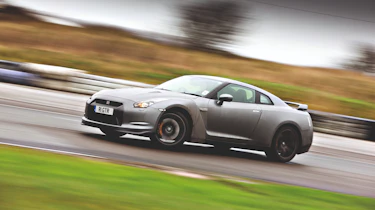
The Nissan GT-R combines facets of all of the pseudo supercars mentioned above. Like the Turbo S, it combines supercar-eviscerating performance in all conditions with relative practicality. Like the Corvette, it’s more ‘bag for life’ than Louis Vuitton inside and like the i8, it can be had for less than a mid-spec family hatch.
Yes, the bravest among us can get into Godzilla for less than £40k. Newer, more powerful, better-resolved examples in better condition are more but the bones are the same whether its a 2009 or a 2018 – brutal performance courtesy of a 3.8-litre twin-turbo V6, a gloriously tractable chassis, an impossibly sophisticated yet entirely natural-feeling all-wheel-drive system and attitude ad-infinitum. To have driven a GT-R is to have known a very specific smugness, that almost nothing, be it a Fiat or a Ferrari, can catch or get away from you on most roads, in most conditions.