Best Lamborghinis – the original supercar maker's best driving machines
You can’t ignore a Lamborghini, and many of Sant'Agata’s creations have hit the right note with evo testers over the years. We run down the very best
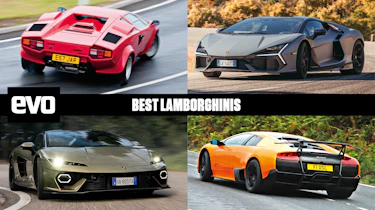
The Lamborghini of today is slightly out of step with the legends of old. Today’s Lamborghinis can glide silently in traffic under electric power alone, have feather-light steering, compliant rides and gold-standard climate control. But they still thrill and excite like the fire-spitting, poster darlings of old.
We’ve driven all the best Lamborghinis and can confirm, it’s that extroverted character that’s most important, in addition to a certain level of capability and performance. Here are the best Lamborghinis, from the Revuelto that does it all, to the wild movie star Countach, to the new Temerario, that could do with an extra dose of Raging Bull character for subsequent iterations.
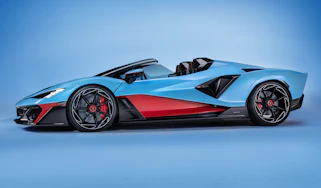
Lamborghini Revuelto
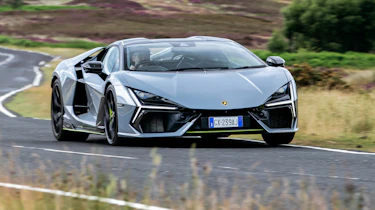
- Prices from: £454,830
- Pros – Predictable, agile chassis; stunning engine; more polished than the Aventador
- Cons – Expensive
- evo Rating: Five stars
Trepidant is the word to describe all who like cars when they learned the next flagship Lamborghini would be electrified. That the Revuelto was to keep its screaming V12 – with a heightened 9500rpm redline no less – tempered some fears. Nevertheless, change on such a level is often feared when it comes to cars that have for so long traded so heavily on core unchanging tenets – drama, extroversion, attitude.
So was the Revuelto the true ‘Audified’ top-end Raging Bull enthusiasts have feared for over 25 years? In some ways, yes. It’s a far better car than the Aventador and Murciélago that precede it, in that it’s more usable, not as cantankerous in normal driving, more comfortable and better made. But it’ll still drop the jaws of all in view as you hit the start button or send the doors skyward. It’s still an awe-inspiring pinup… but where its predecessors were at times as lumpen and uncooperative at speed as they were around town, the Revuelto shocks and impresses every time you drive it.
> Lamborghini Revuelto review – the ultimate modern supercar
This is a V12 Lamborghini that’s, if anything, more accomplished a performance car than it is dramatic to look at. In spite of the added weight – it’s 1772kg dry compared to the Aventador Ultimae’s 1550kg dry – the rear-steering and torque vectoring from the electric motors lend the Revuelto an agility that’s alien to those who know their V12 Lambos well. But it still feels natural, interpretable and honest. There might be a sprawling range of settings for the powertrain and hybrid system, all-wheel-drive system, traction control and chassis dynamics but within coalesces a familiar personality; that of a proper Lambo.
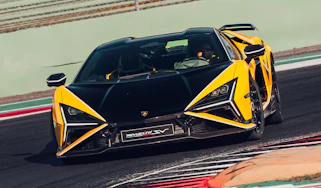
Lamborghini Huracán STO
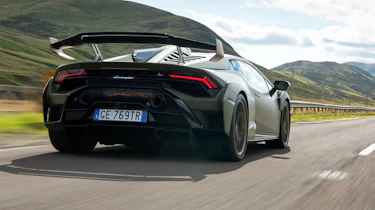
- Prices from: £260,000
- Pros – Huracán fully unleashed. Hallelujah
- Cons – Waking the neighbours. And the dead. And track noise meters
- evo Rating: Five stars
One of the most accomplished and visceral Lamborghinis of recent memory, the Huracán STO combines equal parts Sant’ Agatan drama and dynamic excellence. Like any Lamborghini should, it has you awestruck from 30 steps away. Get closer and this concoction of GT3-aping aero frippery and traditional wedge-shaped supercar stance has you scrambling for the keys. Thankfully, unlike the original Huracán, once you rouse that uproarious 631bhp 5.2-litre V10 and get underway, the driving experience belies the racecar presentation. Instead we found rocksteady composure, direct steering and dependable brakes on the road that give you the confidence to explore all that character.
> Lamborghini Huracán STO review – the ultimate V10 Lambo
Head to the track, warm the tyres and activate all of that aero, and an all-conquering track weapon is revealed. Is it a GT3 car with CarPlay and number plates as the looks suggest? Not quite, but it is every bit Lamborghini’s GT3 RS that will reward and thrill on track all day without breaking a sweat. ‘I had by far the most memorable drive in this car, which is usually the most reliable benchmark on eCoty. It’s the last of its kind at the top of its game,’ was evo co-founder Richard Meaden’s closing comment on the STO as it claimed runner-up at eCoty 2021.
Lamborghini Temerario
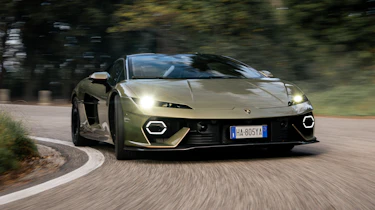
- Prices from: £259,567
- Pros – Agility, blistering performance and redline
- Cons – Lacks some of the grit and soul of the Huracán
- evo Rating: Four stars
Unenviable is the task of being the car to follow the Huracán in Lamborghini’s lineup, especially when going without that effervescent naturally-aspirated V10 engine. The Temerario isn’t wading into battle with both hands tied behind its back, though, for in the old lump’s place is a twin-turbo V8 that revs to 10,000rpm. It works alongside a trio of electric motors to deliver a faintly silly 907bhp peak power output. Lambo was clearly tired of trailing Ferrari and McLaren for power output over the last decade…
> Lamborghini Temerario 2025 review – 907bhp hybrid Huracán successor tested flat-out
While the Temerario uses some of the technical arsenal that makes the Revuelto the best supercar on sale, it’s not as cohesive a driver’s package. The engine, though not drenched in charisma like the old V10, has an almost superbike-like quality on that last climb to its 10,000rpm redline, even if its more mechanical noise soup than music lower down the revs. The new baby Lambo is a thriller out of the gates to be sure – its performance and capability aren’t in doubt. But there’s room for more edge and certainly, a vocal improvement.
‘The way the hybrid technology has been applied makes it feel absolutely up-to-the-minute and endows it with an impressive breadth of dynamic accessibility and capability, not to mention refinement. A Huracán would feel long in the tooth by comparison.’ – Richard Meaden, evo co-founder and editor-at-large
Lamborghini Countach LPI 800-4
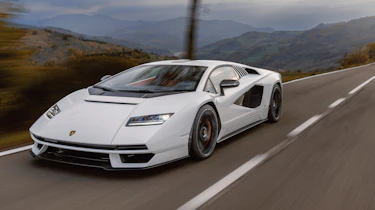
- Prices from: c£2million
- Pros – Looks, performance, ride
- Cons – Not as balanced or refined as a late Aventador
- evo Rating: Five stars
Though it caught a fair bit of flack for wearing the name it does, the modern-day Lamborghini Countach was that rarest of demonstrations that there’s more to Lamborghini than being as mad as possible. There’s an almost Murciélago-esque elegance to it and certainly, a wedge silhouette that you can’t deny pays tribute to the original LP400.

More classically styled it may be but hiding within are the first signs of Lamborghini looking to the future and courting electrification, if only in pursuit of performance. In the Countach LPI 800-4 a supercapacitor hybrid system is married to the familiar 6.5-litre V12 and jerky ISR transmission. The result is Aventador: debugged, with the electrical infill smoothing out the gearbox’s famously jerky shifts and boosting power from 769bhp to a heady 803bhp.
Oddly, we found the Countach was not quite as dynamically well-rounded as the Aventador Ultimae, but what it loses in polish, it surely makes up for in exclusivity and aesthetics. If you roll through Casino Square in one of these, make no mistake, the inevitable handful of Aventador and even Revuelto owners will be looking over in envy.
Lamborghini Aventador SVJ
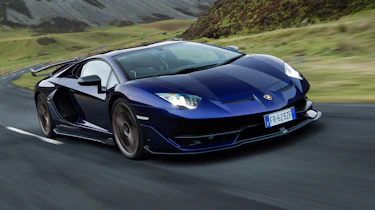
- Prices from £500,000
- Pros – Exuberant V12; surprisingly agile and benign handling; strong brakes
- Cons – Antiquated transmission; uncomfortable bucket seats; poor visibility
- evo Rating: 4.5 stars
Even if you’re relatively familiar with other supercars, the Aventador SVJ is an intimidating car to drive. On the road, it feels impossibly wide, partly because it really is startlingly broad, but also because you sit so far back, so low down, and observe a sliver of the world through a glasshouse of such poor visibility that even Countach owners would shake their heads.
Then there’s the fact you’re attempting to conduct the machinations of a wildly powerful 760bhp naturally-aspirated V12 through a largely unpleasant automated-manual gearshift from one of the automotive world’s least comfortable seats, while minor controls are scattered around the cabin in a way that makes the smaller Huracan feel as logical as a Golf.
It’s a proper Lamborghini then, and for all its faults and foibles, when you experience the Aventador SVJ in its element, it is wildly exciting, surprisingly capable and thunderously fast. All qualities that helped it top the Nurburgring lap times board until very recently, illustrating both its abilities, and the slightly unhinged nature of Marco Mapelli...
Lamborghini Huracán Sterrato
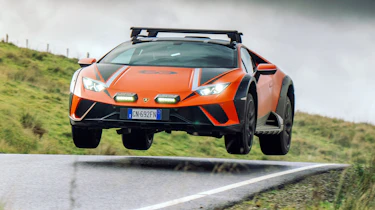
- Prices from: £215,000
- Pros – Enormous fun on gravel, surprisingly refined on road
- Cons – Obvious loss of conventional capability
- evo Rating: Five stars
If the STO is the definition of what a Lamborghini should be on the road and the track, the Huracán Sterrato takes Lamborghini quite literally off the beaten path. For here is a mid-engined supercar better suited to rally stages and rough tracks than racetracks or even your favourite B-road road… or is it?

While sceptical at first, 2023’s evo Car of the Year test proved that it’s one of the best ever Lamborghinis in terms of exploitable, accessible fun – it’s a Lamborghini more drivers can enjoy for more of the time. That it rides better than its track-focused sibling shouldn’t come as much of a surprise given its ride height increase and chunky tyres, with 25 per cent softer springs that are also 34mm longer providing the required travel for an off-road vehicle.
But you still have that cacophonous 5.2-litre V10 engine singing behind you. You still have one of the most bonkers-looking road cars out there, with all the off-road frippery – the rubber wings, roof rails, livery and spotlights – only adding to the sense of occasion. And to be clear, it really will go places no other Lamborghini will, bar perhaps the LM002. Limited to just 1499 units, the Sterrato, along with the STO, made for one hell of a two-pronged farewell for Lambo’s second junior supercar of the 21st-century.
‘Far from being a gimmick, what Lamborghini has – unknowingly – created is the ultimate B-road Huracán, absolutely perfect for our terrible roads. This is a whole new world of supercar,’ was Adam Towler’s concluding statement on the Sterrato at eCoty 2023.
Lamborghini Diablo VT 6.0
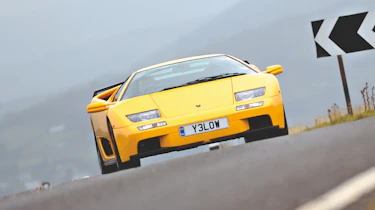
- Prices from: £400,000
- Pros – Best-built, best-looking Diablo of all
- Cons – Heavy clutch, sheer size, slight image problem
- evo Rating: 4.5 stars
Naming your car Diablo sets the tone somewhat. This isn’t supposed to be a friendly car, and the striking proportions (penned early on by Marcello Gandini, who’d also been responsible for both the Miura and Countach before) made no attempt to hide the presence of yet another enormous V12 behind the passenger compartment.
With the benefit of fuel injection, the 5.7-litre unit was now capable of 485bhp, a figure that quickly climbed over time as Lamborghini introduced the SE30 (like the Countach 25th Anniversary, another celebration of the company’s advancing years) with 523bhp and 595bhp SE30 Jota.
2000’s Diablo VT 6.0 wasn’t quite that potent, its six-litre variant of the V12 making 543bhp, but with a decade of development and a helping hand from new owners Audi, it had been turned into a proto-Murciélago, with quality beyond any previous Lamborghini and plenty of ability. Enough, in fact, to finish second in eCoty 2000.
Lamborghini Gallardo Balboni
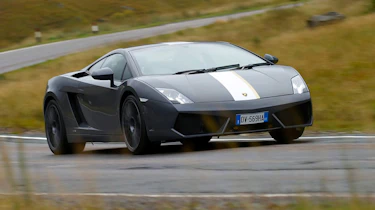
- Prices from: £110,000
- Pros – Wild, rear-wheel drive balance
- Cons – There aren’t many
- evo Rating: Five stars
You’ll find the Huracan Evo RWD elsewhere on this list, a car with all the talents of the rest of the Huracan range but a few of its own too, notably improved steering feel and a more fluid chassis. Well, the Gallardo Balboni was to the standard Gallardo range as the Evo RWD is to other Huracans.
If you recognise the name, it’s because Valentino Balboni was for most of Lamborghini’s history the man responsible for their dynamics, as chief test driver. Balboni retired in 2008, and to pay tribute, Lamborghini named a special Gallardo after him.
Special, because it was rear-wheel drive, and while it lacked the option of a manual gearbox, the 30kg weight saving was welcome, as was the improvement in steering quality, just like the Huracan Evo RWD has experienced recently. The car also got a 542bhp development of the 5-litre V10, calibration tweaks to the “E-gear” automated manual transmission, and a more tightly-wound limited-slip differential. Other “LP 550-2” Gallardos followed, but it was Balboni’s car that set the tone.
Lamborghini Miura P400 SV
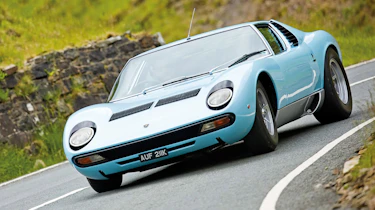
- Prices from: £1.3million
- Pros – Gorgeous looks and engine
- Cons – Languid throttle response
- evo Rating: N/A
As is often the case with Lamborghinis, which tend to remain on sale long enough to go through a few more development cycles than the average car, the final P400 SV was the Miura at its best – short of the extremely rare Jota and SV/J, at any rate.
The Miura set the template for the modern supercar with a mid-engined, two-seat layout, and while its transverse engine layout didn’t survive into the Countach, Diablo, Murciélago and Aventador that have followed since, the Bizzarrini V12 itself certainly did, only bowing out when the Aventador debuted the firm’s second-generation V12 in 2011. Power climbed from the P400’s 345bhp to 365bhp for the P400S and finally 380bhp for the SV.
It was developments to the chassis and aerodynamics that helped the SV realise the Miura formula though, helping to tame a habit for front-end lift at high speeds. Visually, you’ll discern an SV because it’s had its headlight-surrounding “eyelashes” plucked – less distinctive than earlier Miuras perhaps, but the less fussy styling is arguably even easier on the eye.
Lamborghini Murciélago LP640
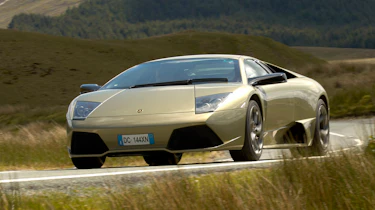
- Prices from: £160,000 (E-Gear)
- Pros – Glorious V12, usability, balance
- Cons – Can be snappy
- evo Rating: Five stars
There were worries that Audi ownership would have a negative effect at Lamborghini. It’s difficult to imagine why today, given what we’ve seen from the company since, but then Audi and Lamborghini were both quite different companies in 1998. As it transpired, Audi began making cars that were actually fun to drive, and Lamborghini’s standards of quality shot up without losing any of their character – a match made in heaven.
The Murciélago, launched in 2001, was the first all-new product under Audi ownership (late Diablos benefited from some gentle massaging). It was spectacular to behold and impressive to drive in its own right, but came into its own with 2006’s LP 640. Tighter and more responsive, it’s one of the best driver’s cars Lamborghini has made.
The 6.5-litre V12 positively screams around to 8000rpm and even the single-clutch automated manual ‘box is effective, but it’s the chassis, tightly-damped, poised and composed, it draws a line between old-school attitude and modern ability.
Lamborghini Aventador S
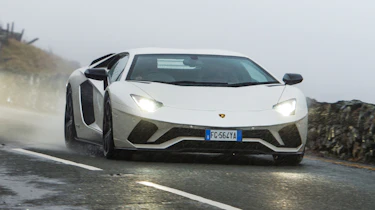
- Prices from: £215,000
- Pros – Improved feel over standard car and a far more engaging chassis
- Cons – Gearbox can't compete with the best modern transmissions
- evo Rating: Five stars
It took a little time for the Aventador to come into its own, and it did so with the Aventador S introduced in 2017. You won’t find the “basic” variant of any other Lamborghini in this list, but that’s effectively what the Aventador S is, yet it’s among the best-driving of the breed.
That 2017 introduction coincided with a few general updates for the model. The styling was refined, and had never looked better, and the S also gained four-wheel steering and an active electronic rear wing to help it cleave the air more cleanly – while giving downforce an impressive 130 per cent bump.
Then there were new dampers and re-engineered suspension, a bespoke Pirelli tyre, and an adjustable driving mode setting slightly cringingly named “Ego”. But no matter, because the result was the most fluid and natural Aventador yet, with genuine steering feel, a more neutral balance, and of course a remarkable engine that even Lambo’s automated-manual gearbox couldn’t spoil.
Lamborghini Countach LP 5000 QV
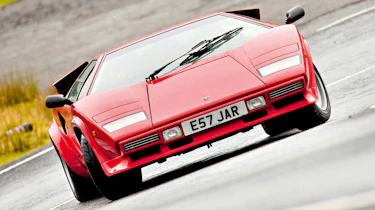
- Prices from: £500,000
- Pros – A surprisingly enjoyable driver’s car
- Cons – Long clutch, heavy controls
- evo Rating: N/A
Your definitive Lamborghini largely depends on which era you grew up in, but you’d be forgiven for using the Countach in all its forms as a yardstick by which all other Lamborghinis are measured. At the very least visually, whether Marcello Gandini’s perfect 1970s wedge, the LP 400, or the later, bewinged and much-adorned models, that illustrated a wilder side to Lamborghini’s shapes that have arguably been more influential on the marque’s current output.
There’s little doubt the later cars are better to drive though, and that means either the run-out 25th Anniversary launched in 1988 or, ideally, the LP 5000 Quattrovalvole, or QV. We say ideally because while the two are very similar mechanically, ultimately the 25th Anniversary’s even busier restyling (the work of none other than Horacio Pagani) is just a bit too difficult to love.
The QV gets the important parts anyway – that four-valve head, plus a bored and stroked 5.2-litre variant of the amazing Bizzarrini V12 with 449bhp, and the most developed chassis. Heavy controls make the Countach intimidating at first, but the feedback, howling engine and the reward of learning its ways means the Countach is far more than just a dramatic shape.
Lamborghini Huracán Tecnica
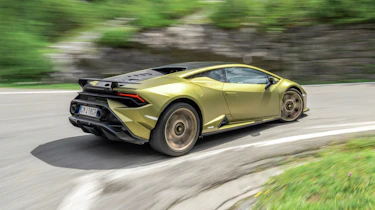
- Prices from: £190,000
- Pros – Magnificent engine mated to a sublime chassis
- Cons – Inconsistent brakes, lack of configurable dynamic modes
- evo Rating: Five stars
The Huracán could have been waved off into the sunset quite happily by the Sterrato and STO. Two-pronged last gasps don’t get much better than a hardcore track weapon paired with an off-road special. But as has been the way with Lamborghini in the past, the Huracán needed to soldier on just a bit longer ahead of the Temerario’s arrival.
Enter the Tecnica, shorn of any direct track or off-road USP, it earned the title of perhaps the best all-round Huracán. Think of it as a Touring, to the STO’s GT3 RS, still with a razor-focus but minus the rougher edges – softer than Lamborghini’s track star but more focused than the RWD.
> Lamborghini Huracán Tecnica review – a supercar of the old-school
The result is a nice compromise, one that balances more usability with enough edge to keep you engaged all of the time. The Tecnica wasn’t quite perfect, it lacked a configurable dynamic ‘Ego’ mode, to mix and match aggression across the powertrain and chassis plus enough balance and consistency in the brakes, but it’s the Goldilocks Huracán nonetheless.
Murciélago LP 670-4 SV
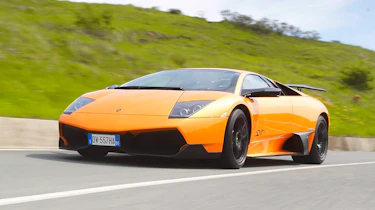
- Prices from: £800,000
- Pros – A supercar in its truest, wildest sense
- Cons – Oversteer comes quickly and with little warning
- evo Rating: Five stars
Ferrari might make a car called the 812 Superfast, and that name might carry plenty of historical weight to it, but you sense the name does it a slight disservice, since Lamboghini’s equivalent SuperVeloce, trips off the tongue so easily. And you’d not call the 812 the “SF”, but the letters “SV” have appended many a Lambo and always signify something special.
The Murciélago was already quite a machine in standard specification and as you’ll read elsewhere on this page, a mighty fine performance car in LP 640 form. So the LP 670-4 SV predictably took things to an even greater level, with 661bhp from its 6.5-litre V12 and significant changes elsewhere.
Among these were visual enhancements aimed at both cooling and aerodynamics. Front and rear spoilers improved the car’s high-speed downforce, while larger intakes fed the brakes. Like many subsequent SVs, the 670-4 made good use of carbonfibre components, shedding 100kg, aided too by a lightweight exhaust and carbon-ceramic brakes. One of Lamborghini’s most extreme cars, at its most extreme.