Best British cars – the finest driver’s cars to come out of Great Britain
Britain still makes great cars, from luxury land yachts to scintillating sports cars to visceral supercars

There are plenty of reasons to call Britain’s ‘Great’ status into question but when it comes to performance cars, we’re as much a world leader as we’ve ever been. Pine for the glory days of the McLaren F1 if you want but in 2026, we’re putting out everything from the Aston Martin Vantage to the first true successor to the F1, Gordon Murray’s T.50. We build and engineer a lot of the world's top racing cars, we supply some of the finest supercars money can buy and we even develop the engines that power the world’s most desirable hypercars.
Britain has produced some of the world’s most revered performance cars over the years; models that capture the innovation, engineering brilliance and charm it takes to deliver the Thrill of Driving in its purest form. When viewed through an evo lens, narrowing the portfolio down, rather than struggling to make it up to ten, is the problem at hand. Read on for a rundown of the best British performance cars we’ve driven – ranks that the new Aston Martin Valhalla and DB12 S, the new Lotus Emira 420 Sport, the Ariel Atom 4RR and the Morgan Supersport 400 have easily waltzed into. The hotly-anticipated Jaguar Type 01 will soon by vying for inclusion also.
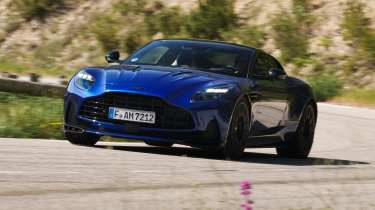
Aston Martin DB12 S
- Pros: Improved in all areas
- Cons: Other than the infotainment system
- evo rating: 5 stars
The original Aston Martin DB12 was a confusing car. Striking to look at, elegant from many angles, delightful to be in. But inconsistent to drive. When you wanted a calm GT it bucked and fidgeted, when you wanted a more direct sports-GT it felt undercooked and hyperactive, which was an impressive combination. But the DB12 S fixes pretty much all of the original’s shortcomings and improves on what was already class leading.
A little more power is extracted from the 4-litre twin-turbocharged V8 for a sharper, keener top end but it’s the work to the chassis that makes the DB12 S such a standout GT car. The ride is much calmer, the damping more linear and cleaner, and the whole car breathes with a cleaner consistency with the fidgeting nature of the original all but eradicated. On a challenging road you can dive deeper into the chassis, be more precise and committed and enjoy the DB12’s maturity and ability.
Away from switchbacks it’s also a better cruiser, more refined, quieter and less hyperactive. Matched to a class-leading cabin it’s a car you want to drive and drive until the road runs out. If there was a question mark over the DB12 when it first debuted in 2022 there isn’t now.
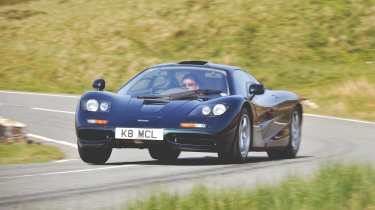
McLaren F1
- Pros: Still the ultimate supercar, over three decades on
- Cons: 90s headlights and brakes
- evo rating: 5 stars
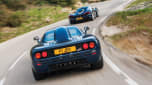
We start with perhaps the ultimate British car – the McLaren F1. When Gordon Murray lays out a design brief, only the technology of the day will get in the way of him seeing through his vision. With the F1, that brief was to create the ultimate road-going supercar.
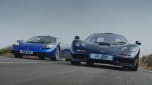
The engine – Paul Rosche’s glorious 618bhp S70/2 6.1-litre BMW M V12 – and six-speed manual transmission take it most of the way, but they really are the cherry on the cake that is the F1’s entire constitution. From the steering, to the handling, even to the view out and its compact dimensions. It’s all a product of Murray’s fanatical devotion to light weight and driver interaction, and his disdain for lazy engineering. The result is a car that, even over 30 years on from its introduction, sets standards when it comes to the Thrill of Driving.
‘Turn in, feel the slight push of the nose as the wheel goes a fraction lighter in your hands, a little lift of your right foot to transfer the weight and then back down for a quick bark of throttle to unstick the big 315-section rears. They’ll spin up quickly and the tail swings fast, but the steering knows what to do and you can let the perfect circle run through your hands into opposite lock as the car arcs round behind you. If you’ve got it right you’re now sliding an F1 and happier than Larry.’ – Henry Catchpole, evo contributing editor.
Aston Martin Valhalla
- Pros: Agile and exciting handling on road and track; fascinating engineering; looks a million dollars; unique character
- Cons: Flat engine note; sparse interior; no luggage space
- evo rating: 5 stars
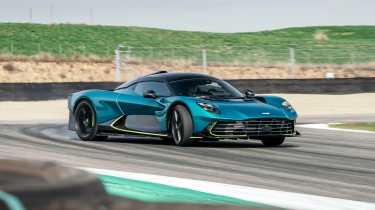
Ignore that it took longer for Aston Martin to bring its Valhalla supercar to market than most cars are on sale for. And gloss over that it was meant to be powered by a bespoke Aston Martin-designed and built V6 engine; and that the number of CEOs that have passed through the doors at Gaydon during its development makes being a Premier League football manager look like a stable career choice. Instead, enjoy and celebrate that the Valhalla is not only the best Aston Martin full stop, but is also one of the best supercars you can buy right now.
Its performance comes courtesy of a brilliantly integrated 4-litre hot-vee V8 engine that started life as a power source for AMG but has been opened up by Aston Martin’s engineers to create a bespoke unit. So not only is this flat-plane crank the highest performing motor Aston Martin has installed in one of its cars, it’s also more powerful than the AMG GT Black Series model that donated it. Peak power from the V8 alone is 817bhp, with the three electric motors running - two on the front axle, one on the rear - peak power climbs to 1064bhp.
Active aerodynamics have influenced the design but not to the extent that they did with the Valkyrie and the chassis is totally bespoke. But where the V12-engined Valkyrie features an active suspension system the Valhalla’s is a more traditional passive spring set-up with adaptive dampers. To drive on road or track it is one of the most exhilarating, engaging, capable and thrilling supercars we’ve ever driven and the very best Aston Martin. Its blend of track capability with road strong road manners makes it one of the very best cars we have driven 2026.
Lotus Elise S1
- Pros: Light and lithe
- Cons: Patchy fit and finish
- evo rating: 5 stars
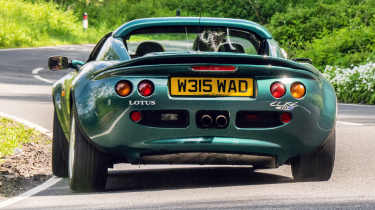
It’s arguable that a number of principles that drove the conception of the McLaren F1 found a home in the Lotus Elise, which is why like the F1, it remains a high watermark today. Small, lightweight, tactile and compliant – as a tool to pick apart a dipping, undulating British country road, the Lotus Elise was a revelation.
A shoo-in, then, as one of the best British cars. But it’s not just the sum of its parts that makes the Lotus Elise so compelling; it’s the fascinating execution and journey to that end result. Yes, the F1’s place as the first all-carbon car makes it incredibly innovative – as well it should have been given it cost over £600,000 when new. But the Elise, for its price certainly, was arguably just as ingenious, debuting the bonded extruded aluminium structure that went on to define an entire generation of Lotus sports cars.
Aston Martin adopted a similar construction method that it continues to employ today, too. The lightest and most pure Elise is the Series 1, which weighed just 731kg and used a compact, lightweight Rover K-series engine, perfectly in-keeping with the car’s philosophy.
‘It will kick the tail wide if you’re keen, and do it tidily, but that’s not really its style. It’s the Elise’s deftness, its effortlessness across the ground that was unique and compelling back in 1996 and still is now. Back then, I got as many people into it as I could and it entertained and delighted them all, whether they drove or rode in it.’ – John Barker, evo co-founder and editor-at-large.
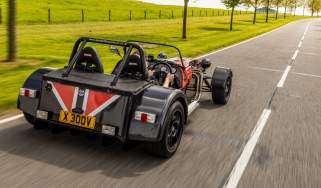
Caterham Seven evo25
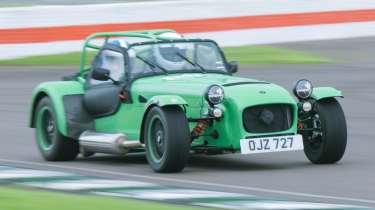
- Pros – As raw as driving gets without rubbing your hands along the road
- Cons – Far from an everyday driver’s car
- evo rating: 5 stars
British engineers love extremes as much as they love minimalism and as such, the Caterham Seven makes the Lotus Elise look like a Range Rover. You are that much closer to the elements, that much closer in literal reach to the road passing beneath you and the noises you associate with motorised transport are that much louder; of the engine, the gearbox, the wind passing all around and the road surface grazing the tyres.
The Caterham Seven is a masterclass in the essentials of the Thrill of Driving, and this is true from the basic three-cylinder 170 version, right up to the utterly manic 620R. The perfect performance car on which to base a special edition celebrating 25 years of evo, then.

It figures that the Caterham Seven evo25 should find a place on our list of the best British cars, because it’s our idea of the perfect Seven for use on both the road and on track. It combines a 210bhp Duratec motor, five-speed manual gearbox and 420 Cup suspension with comfort seats, the more practical ‘Trackday’ roll-cage and full weather equipment – heater and all. Caterham perfection.
‘I’d worried that the weighty steering would put a dampener on its on-limit playfulness but once I had a feel for the lines, it all became about the rear and managing mild, power-induced slip. It was brilliant fun, tactile and transparent, carrying speed where bigger, heavier cars were tentative, its braking points tens of yards after those same cars.’ – John Barker, evo co-founder and editor-at-large, who drove the Caterham Seven evo25 numerous times during our long-term test.
GBS Zero
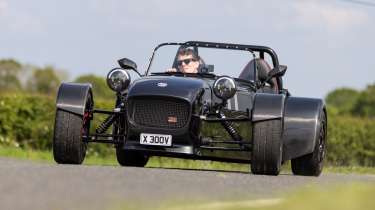
- Pros: Roomier than a Caterham; stability and predictability; scope of customisability
- Cons: Bulkier than a Caterham; slower steering; ultimately not as thrilling
- evo rating: 4 stars
The Caterham 7 is of course forefront of your mind when thinking featherweight road and track specials butut GBS - Great British Sports Cars - is well worth consideration too.
Following the same layout formula as the 7 with the driver and passenger sat almost on the rear axle, the four-cylinder engine at the end of your toes but while it looks quite similar to the Caterham, its construction is more unique. Built around a steel tubular spaceframe with stressed aluminium sections create an almost monocoque style layout and a chassis that’s almost twice as stiff as a Caterham 7. With a flat floor and some nods to aerodynamic devices around the windscreen the GBS Zero is almost 21st-Century ready…
A 2.5-litre Ford Duratec mated to a Mazda five-speed gearbox completes the powertrain and the results are simply outstanding. It’s larger than a Caterham 7, its steering is not as quick and it approaches its limits in a softer, less extreme way. It might look like a Caterham but it drives with its own identity, one that’s as captivating and enthralling as any car of this type.
TVR Sagaris
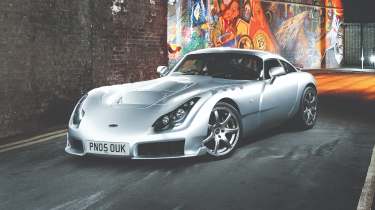
- Pros – An intoxicatingly thrilling sports car, to drive and look at
- Cons – A bit garish, usual TVR reliability caveats
- evo rating: 4.5 stars
TVR is on the other end of the spectrum to our other entries thus far, putting a particularly English spilt-pint, Marbella tan flavour of flamboyance at the top of its list of priorities over engineering excellence and outright precision. But over the years it’s turned out some glorious machinery, with the TVR Sagaris the pinnacle of the breed. It was the last TVR to be produced and benefitted from a number of detail changes that made it less quirky to live with and more functional.
While it probably still wasn’t enough to tempt buyers out of their BMWs and Porsches, it had much going for it. A low kerb weight of under 1100kg and a sublime straight-six that doled out over 400bhp endowed the Sagaris with a claimed 3.7sec 0-62mph time and a top speed of 185mph – thoroughly modern performance but achieved without modern niceties such as airbags, traction control or even ABS.

It could be a handful on the road and it didn’t respond well to being taken by the scruff of the neck, but if you were more measured with your inputs you could enjoy a whole lot more of what it had to offer – precise and instant turn-in, a balanced chassis and phenomenal pace.
‘There is considerable performance on offer, but only if the driver is first willing to invest the effort. That must make this deranged TVR one of the most absorbing performance motoring experiences of recent decades.’ – Dan Prosser, former evo road test editor.
Aston Martin V12 Vantage S
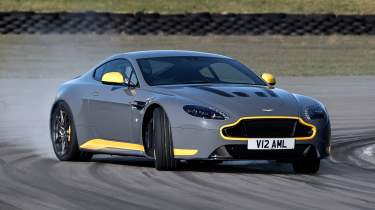
- Pros: Amongst the best Astons ever made
- Cons: Old-school automated 'box (so get the manual)
- evo rating: 5 stars
Aston Martin is perhaps the most beloved British brand. Indeed for all its years (most of them) of unprofitability, it’s survived by producing achingly desirable and beautifully designed GTs that even the hard-headed finance types of a certain giant American motoring monolith couldn’t ignore.
But in spite of how tumultuous the Ford era was, it arguably gave way to Aston’s very best era so far; that of the 5.9-litre V12 and the aforementioned VH aluminium platform. The car that perhaps best sums up that era and is probably an example of Aston at its best, is the V12 Vantage S. We love the V12 Vantage at evo. Such a big powerful engine in such a small car was always going to be hilarious, but not necessarily excellent dynamically. Thankfully, the V12 Vantage turned out to be almost precision-honed for the job of delivering driving thrills.

The V12 Vantage S then double-honed it, first puffing the voluminous V12 up to 565bhp, then adding a seven-speed manual transmission. Perfect? No – that ‘box is a bit notchy – but Astons, especially the V12 Vantage, endear in a way that isn’t contingent on objectivity.
‘Crowbarring 50 per cent more cylinders into a small car is childishly appealing to any enthusiast, but there was always the danger that Aston’s engineers could have created a caricaturish monster. They haven’t. It’s got character yet it’s refined; it’s got instant pace yet a depth that makes you want to live with it. Debonair and unafraid, it feels like a truly British Aston Martin.’ – Henry Catchpole, evo contributing editor
McLaren P1
- Pros – Enormously capable and fast yet exploitable and adjustable
- Cons – Engine more industrial than lusty
- evo rating: 5 stars
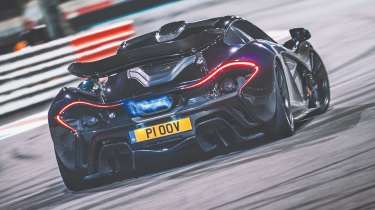
Wrongly billed as an F1 successor when it arrived in 2012, the McLaren P1 was in a way lucky to escape the shadow of the Almighty. But then, to say it was luck would be to do the P1 a disservice, because it’s one of the most thrilling hypercars of any era, let alone its own. It was a first taste of McLaren Automotive at its best, with as much of a sense of humour as it has absolute technical majesty. A carbon monocell chassis, interlinked hydraulic suspension with variable ride height, Akebono carbon-carbon brakes and a hybridised powertrain with torque fill are just some of the highlights.
But translated out of Ron Dennis speak, it’s a car that can drop on its shocks and pop its enormous hydraulic DRS-capable wing ready for a monstrous lap, dropping the jaws of all in its presence in the process before even turning a wheel. It’s a car that has a combined 907bhp, that can eviscerate the rear tyres and dissolve like putty in the driver’s hands for spectacular big smokey drifts, having only just broken a record time the lap before.
It’s a technical tour de force that engages the driver in the most binary, interpretable way, presenting a banquet of awe and adrenaline at every rung of its performance envelope, from winding country roads to the very fastest Grand Prix circuits. The P1 is bleeding-edge motorsport science – itself a craft Britain masters – and quintessential hypercar theatre, triple distilled on four wheels wrapped in flow-formed carbon.
‘Driving a fully lit P1 has been likened to riding a firework. It’s intense and exhilarating and, if you attempt to deploy the IPAS battery boost or trigger the DRS system, a stern test of your ability to multi-task. Of course both are gimmicks, but I’d be lying if I said there isn’t endless fun to be had from feeling the surreal thump of battery power supplementing the on-boost V8. It’s genuinely like you’ve pressed the fast-forward button. Likewise, using the DRS button to wave bye-bye to whatever’s in your mirror is childishly amusing. Who says McLaren doesn’t have a sense of fun?’ – Richard Meaden, evo co-founder and editor-at-large.
Jaguar XE SV Project 8
- Pros: The ultimate road and track Jaguar
- Cons: It’s pretty extreme for some tastes
- evo rating: 5 stars
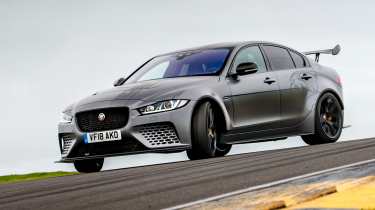
In its standard form the Jaguar XE wouldn’t be getting close to a place on this list. That speaks volumes as to the extent of its transformation into the Project 8. This Jaguar SVO skunkworks machine is a genuinely serious performance saloon.
Project 8 is a machine that wears its heart on its sleeve – there’s no chance you could call the huge front and rear spoilers or blistered arches subtle – but they’re there for a purpose. And that’s to make the XE seriously fast. The body is almost exclusively made from carbonfibre or aluminium, the track’s wider and those 20-inch rims are wrapped in Cup 2s and hide 400mm front discs. Performance is courtesy of a 592bhp V8 which brings up the benchmark sprint in a blink-and-you’ll-miss-it 3.3sec – impressive for a 1.8-ton machine. But it’s not the Project 8’s straight line speed that’s its most impressive party trick as on the road it’s rapid, responsive and remarkably refined.
It feels light on its toes and the extremely precise steering allows you to perfectly position the big Jag. It’s balanced, has colossal grip thanks to its four-wheel drive and Cup 2 rubber (although it can be a little skittish in the wet) and the brakes wash off speed without complaint. It’s an amazingly rounded machine, and if you forgo the Track Pack that ditches the rear seats in favour of a roll cage, you could almost call it practical family transport.

‘Everything about it marries exaggeration with a tenacious accuracy. So often, shouty V8s and blistered, swollen bodywork are used to distract from a dynamic repertoire that’s big on brute force but actually rather blunt beneath the surface. The Project 8 balances shock and awe with an inherent sharpness that’s captivating.’ – Jethro Bovingdon, evo contributing editor.
McLaren 750S
- Pros – Hypercar pace and intensity, supercar price (and availability)
- Cons – Engine not laden with character
- evo rating: 5 stars
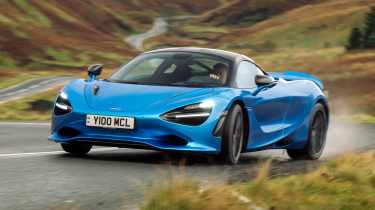
While the P1 was a heady peak for McLaren, the 750S and indeed the 720S that preceded it, distilled limited-run million-pound thrills, minus the electrified element, into a production supercar anyone can order if they are sufficiently well-heeled.
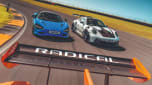
It affirms that the supercars of today really are faster than the hypercars of yesterday. The 750S sets benchmarks for raw pace and technical acumen but also raw thrills and interactivity. The 720S that preceded it was McLaren shaking off any stylistic conservatism with a jaw-dropping design, and while the 750S is more of the same visually, it now has a shot of 765LT-style aggression in its DNA. In an age of hybridised and electric rivals, the 750S is the consummate supercar.
‘It goes without saying that the 750S is obscenely fast. Give it everything and the way it surges forward is eye-wideningly intense. It’s still driveable and intuitive, however, perhaps more so than something with about as much power as a ’90s F1 car behind your shoulder blades has a right to be.’ – James Taylor, evo deputy editor.
Aston Martin Vanquish
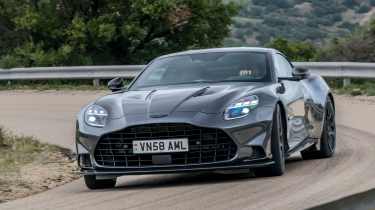
- Pros: Enormously fast yet an exploitable, usable, beautiful GT
- Cons: Expensive, heavy
- evo rating: 4.5 stars
Aston Martin’s post-VH era of sports cars and GTs has shown so much promise but some of these models have been flawed in key areas, from ergonomics to dynamics and sometimes even in terms of style. Not everyone got on with the DBS of 2018, as an alternative to the Ferrari 812. The new Vanquish that takes its place however, a development of that car, is a total debug. More than that, the Vanquish is now on a level of form that puts it potentially beyond that of the 12 Cilindri, its main rival from Ferrari.

Nevermind that it’s arguably the prettiest Aston since the original V12 Vantage of 2009, it’s also one of the most transparent and engaging to drive, in spite of its voluminous 824bhp potency also making it most powerful front-engined GT it’s ever made, One-77 included. When we drove the run-out DBS 770 Ultimate, we really hoped that Aston would pick up where that exceptional super GT left off. The Vanquish absolutely does, and then some. Absolute power doesn’t corrupt absolutely if harnessed with the kind of capability the Vanquish exhibits.
‘The Vanquish ticks an awful lot of boxes: It looks wonderful, sounds amazing and offers spectacular performance. It’s sharp, tactile and engaging when you want it to be, satisfying the super-GT part of the brief, and nails the pure GT part too, with a continent-crossing combination of supple low-speed ride, firm but comfortable seats, superb wind noise refinement and an outstanding sound system.’ – John Barker, evo co-founder and editor-at-large.
GMA T.50
- Pros – Driving perfection, as it says on the tin
- Cons – All are sold and no doubt doubled in value
- evo rating: 5 stars
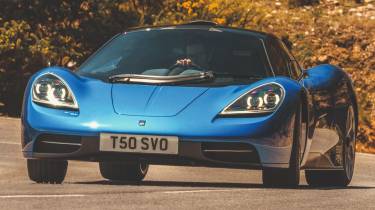
We now come full circle with Gordon Murray’s spiritual successor to the McLaren F1: the GMA T.50. Everything he couldn’t do in the early 1990s, he wanted to do here. Everything he found in hindsight to be wrong with the F1 – even if he was the only one who saw it that way ��� he wanted to do right this time. In some ways, the T.50 has been painstakingly refined – the result of a detailed audit of the F1. In others, though, it’s a totally different animal.

That Cosworth V12, which famously rounds the tachometer all the way to 12,100rpm, kicking out 656bhp along the way, has a character at full chat closer in kin to McLaren’s 1991 F1 car than its 1993 road car. Its design has more of a ‘60s-inspired sensuality – minus perhaps the fan at the rear – than the F1’s quite contemporary, modernist look. But the core tenets of the F1 are built upon and are enshrined in GMA’s motto: Driving Perfection. The T.50, with its deftly-honed passive suspension, only partially-assisted steering, obsessively-crafted gear shift, sub-1000kg kerb weight and cacophonous V12 is every bit the new standard bearer to take over from the F1.
‘I’ve never known acceleration so addictive. It doesn’t have that beautiful, rich induction sound of the McLaren but its frenzied fierceness, like VTEC on fast-forward, makes the hairs stand up on the back of your neck every time you crack the throttle. But the chassis is fun and lets you truly use the engine rather than just experience it. There is a predictability and playfulness that combines with the razor-sharp response of the engine to let you balance the car with a sort of wide-eyed ease.’ – Henry Catchpole, evo contributing editor.
Morgan Supersport 400
- Pros – Supersport finds its voice, and a dizzying turn of pace
- Cons – Costs an extra £30k, needs concentration at the limit
- evo rating: 5 stars
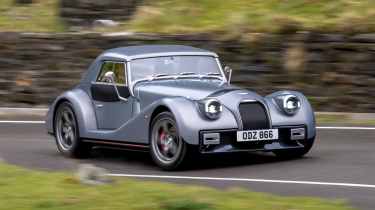
Delicate, tricky, is the task of modernising Morgan, for if you go too far, you risk bonfiring the whole thing. So important is a Morgan’s antiquity to its character. Happily, the folks in charge in Malvern at the moment absolutely get it. So in the new Supersport 400, we have a Morgan that maintains the classic look, albeit with a veneer of restomod-esque modernity, quality and attention to detail and an even greater focus on contemporary dynamics and performance than the standard Supersport.

It looks great but what makes the Supersport 400 one of the best British cars of the moment, is that it pulls off the same trick in terms of how it drives. The new CXV platform is stiffer, the steering is more precise, the suspension has been overhauled and they’ve fitted proper wheels and tyres. Fitted with Nitron dampers and the optional Drexler limited-slip diff, this is a proper, playful sports car, contemporary in its willingness and ability. It’s easier to live with too, with more space inside, improved quality and a choice selection of toys – who saw Bluetooth phone connectivity coming for Morgan? In the Supersport 400 the charm is still there, with a new dimension of modernised style, dynamics and livability. A Morgan you can have as a second car and a car that you can confidently go corner-for-corner with most Porsches in.
'Together with the searing turn of pace it’s now capable of, and the sharpened chassis response, the 400 specification makes the Supersport a truly exciting experience. The regular model is already a very talented, covetable car and these latest developments lend it an extra dimension. Ride quality is a subjective thing but for me it’s still comfortable, even on the stiffer damper settings.' – James Taylor, evo deputy editor
Bentley Continental GT Speed
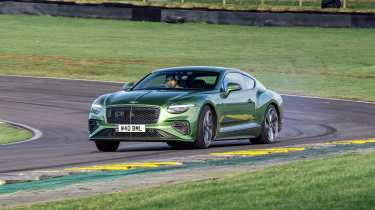
- Pros: Immaculately engineered, blisteringly quick and capable
- Cons: Almost unacceptably heavy, not a touchy-feely driver’s car
- evo rating: 4.5 stars
Of all the marques in this boutique luxury space, Bentley is perhaps in the best position given the times we’re in. For now there’s not a Bentley on sale that can’t be had with quite a sturdily sized battery and strong emissions-free electric range. Happily, partial electrification comes with a significant bump in power and performance, to over 771bhp.
That does mean extra weight – the Continental GT Speed is now close to 2.5tons – but clever air suspension tech, active anti-roll control, rear-steering and a proper limited-slip diff afford this stately bus otherworldly control and agility. An Aston or a Maserati might be lighter and more dynamic but we’d challenge anyone to prove the Continental GT Speed wouldn’t fit into their everyday lives with more purpose and usability.
‘It still has the same continent-crossing comfort, sense of presence, and an enjoyable soundtrack: the V8 is a truly characterful engine and the hybrid powertrain is integrated in such a way as to expand the car’s repertoire rather than restrict it. With more exposure to the GT at higher speeds, perhaps the increased weight will make itself known – this is a 2.5-tonne car after all. But on this first impression, hybrid power suits the Continental.’ – James Taylor, evo deputy editor.
evo’s other favourite Brits
The list above is by no means a comprehensive run-down of our favourite British cars, and it’d be doing you and the cars themselves a disservice not to mention some of our other highlights, from the most intense supercars and track cars to the most superb luxury and grand touring models.
Aston Martin Vantage GT8
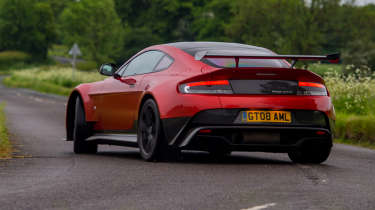
Aston Martin was perhaps wrong to tout the 2005 V8 Vantage as a direct rival to the 911. Because while it didn’t stand up as a direct sports car competitor, the subjective appeal it could leverage over the German was worth celebrating. Its sound, its looks, its character and attitude were all up to standard.
The Vantage GT8 that saw the V8 off with a bang some 11 years on, was that essence of the V8 Vantage on amphetamines. It lacked the precision and outright capability of a 911 GT3 but this brutish Brit was utterly intoxicating, overflowing with oldschool charm and character. Perhaps this put the car out of step with its razor-sharp quasi-racer looks but the drivability and tactility earned it a place on 2016’s evo Car of the Year lineup. Its face didn’t quite fit in 2016, the year of the 911 R, Giulia Quadrifoglio and McLaren 570S, but today, its outlier punk rock character works entirely in its favour.
Aston Martin Valkyrie
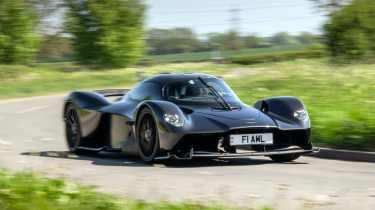
It’s been a while since you could go out and buy a top-flight Le Mans car for the road – the last time was probably around the era of the Porsche 911 GT1 and Mercedes CLK GTR. Yet that’s exactly what the Adrian Newey-designed Valkyrie is. The road car is hot, extremely noisy, and occasionally pernickety, but also an intense experience and a remarkable achievement, from its aero-first bodywork to the staggering 11,000rpm Cosworth V12 – and that despite those things it can still, mostly, be driven on the street; evo’s James Taylor even drove one from the UK to Le Mans.
Aston Martin Vantage
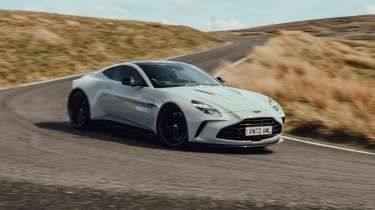
It’s taken a couple of goes, but Aston Martin has finally nailed it with the latest Vantage, the best iteration since 2005’s deeply appealing V8 Vantage. The latest car is hard to fault in the styling department, just as a good Aston should be, and with 656bhp it certainly doesn’t fall short on performance, with multi-stage traction control to keep things in check. But best of all, it has wonderful balance which allows you to exploit all that power, with enough communication to reassure you throughout the process. For that, we can forgive the occasionally brittle ride and slightly confusing touchscreen inside.
Ariel Atom
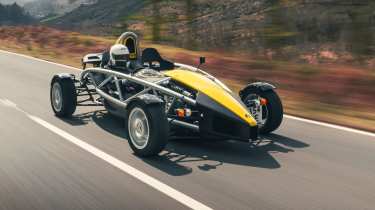
It’s hard to believe the original Ariel Atom is now a quarter of a century old. Like all the best cars (and a lot of the other Brits on this list), it’s essentially timeless – the qualities that made it great back then still apply today. The earliest models could be a little bit of a handful in some conditions, truth be told, but Ariel worked hard to refine it over the years, while the basic recipe has remained unchanged over the decades. It’s still a work of engineering art to behold and deeply exciting to drive, without, as so many others have done, simply copying the Caterham formula.
Ariel Atom 4
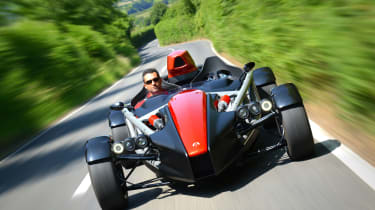
Here at the other end of two and a half decades, is the Atom 4. Around since 2018, it now uses turbocharged four-cylinder Honda power, making 320bhp in the 4 and a full 400bhp in the 4R, the latter adorned with large front and rear wings to produce 110kg of downforce at 70mph. Massive performance is a given, though if it all gets too much, you do get three stages of boost, so you can ease your way up from about 200bhp. It only weighs 595kg too, and you feel that in the way the Atom 4 moves – blistering in a straight line, and not much slower in corners.
Ariel Atom 4 RR
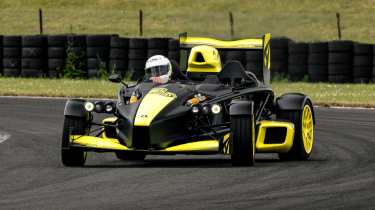
The Ariel Atom is extreme as road cars go. The 400bhp Ariel Atom R is even more extreme – more track car than most would be able to exploit to the fullest, able to be made more extreme with a Quaife sequential paddleshift gearbox. Then there’s the Atom 4RR, which is surely nothing short of Britain’s ultimate track car and with 525bhp, is one of the most powerful road cars Ariel has ever produced. It gets to 62mph in just 2.4sec, 100mph from zero in just 5.1sec, but don’t think of it as ‘just’ a 4R that’s more powerful. Ariel went over the existing car with a fine tooth comb, tweaking the chassis (now fully bronze welded), enlarging the brakes and effectively rebuilding the Honda engine with bespoke components to make this the ultimate Atom. The magic of it though is that it’s not intimidating. You can work your way up through its various maps, switchable traction control and safety systems. There’s just the McLaren 750S-spec £250,000 price to get over…
BAC Mono
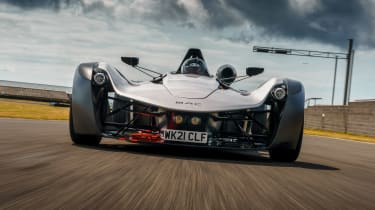
Briggs Automotive Company, BAC, launched the Mono in 2011, and to this day there’s been nothing quite like it – other than BAC’s own updated Monos and 2019’s more extreme Mono R. Speak to the Briggs brothers and their aim was clear: a road car completely uncompromised by normal road-car constraints. So you only get one seat, since a passenger is only dead weight, a central driving position, and a mechanical layout more racer than road car. It really is built for high speeds, being a bit clunky and industrial at a crawl, but extend it, and few cars are more exciting.
Bentley Flying Spur
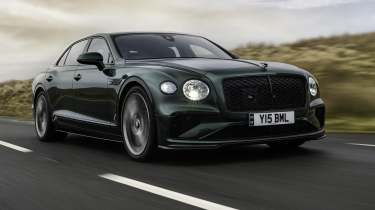
Mechanically similar, we reckon the Flying Spur is just that bit cooler than Bentley’s own Continental GT. A proper Bentley really needs four doors, doesn’t it? The styling is grand and imposing and the cabin truly beautifully appointed if, ironically in this day and age, a little too festooned with buttons. Now driven by a V8 hybrid rather than the old W12, performance is truly effortless, and the drivetrain strikes the ideal balance between solitude and burbling V8 noises. Despite weighing 2.6 tonnes, it’s also great to drive, always managing to keep its mass in check.
Bentley Mulsanne
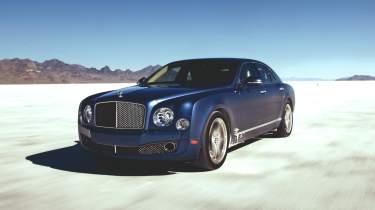
The Mulsanne disappeared from Bentley’s lineup in 2020, but we’ve still not forgotten it. Even more so than the Flying Spur it defined how a Bentley should feel – namely, incredibly luxurious and undemanding to drive, but still capable of surprising the driver with its abilities. The last Bentley to be fitted with the old ‘six and three-quarter litre’ V8 (making 505bhp as standard, 530bhp in Speed form, with 752lb ft and 811lb ft respectively), it moves so effortlessly that the tachometer needle rarely strays above about 2000rpm. Yet, as we found, you can also have a conversation at normal indoor volumes doing nearly 180mph on the autobahn…
Caterham 420 Cup
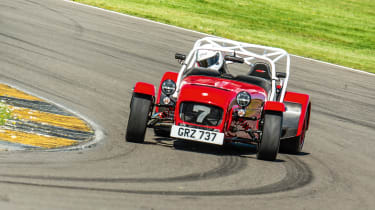
‘Few mechanical devices on four wheels are as entertaining or thrilling’ is how we summed up the Caterham 420 Cup in our full, five-star review. We could probably just leave it there – after all, Caterhams have always been about as good as it gets for automotive thrills, but the impressive thing is how the brand occasionally seems to one-up itself with a new model. The track-spec 420 Cup is just such a car, with a sequential gearbox, Bilstein dampers, and a roll cage thrown into the mix. What a car.
Caterham R500
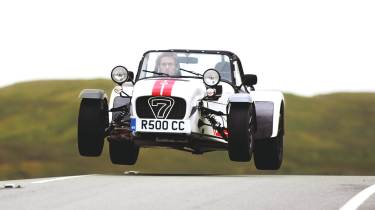
By most standards Caterhams are already ‘super light’, but given Caterham applied the Superlight term to its R500 in 2008, you know it really wasn’t joking. With a 263bhp Duratec engine in place of the previous R500’s Rover K-series, a lightweight chassis and thinner body panels, Caterham got weight down to only 506kg, giving 528bhp per ton – more than a Bugatti Veyron. You got the same compromises as all Caterhams, but amplified thrills
Jaguar F-type SVR
The Jaguar F-type was not a car that felt like it needed a more extreme variant; after all, the F-type R finished an impressive second in eCoty 2014, to a Ferrari 458 Speciale. But in 2017 we got the F-type SVR, its supercharged V8 boosted by 25bhp and 15lb ft (to 567 and 516), a titanium and inconel exhaust, and a few suspension tweaks. Sure enough, it managed to be both incisive and still comfortable-riding, and of course, fairly brisk – 0-60mph took only 3.5sec. Overkill, perhaps – the noise was a little much – but a real British muscle car.
Land Rover Defender Octa

On the basis it’s getting harder to explore a car’s performance on the road these days, here’s a car that doesn’t even bother with the roads. Another JLR SVO project, Octa is to the Defender as the Project 7 and 8 were to their Jaguar counterparts, cleverly honed to excel in its chosen environment. The BMW-sourced 4.4-litre twin-turbo V8 makes 626bhp, which feels interesting indeed from the Defender’s high perch, but the suspension with its hydraulically-linked active dampers is more than up to whatever surface you fancy. It’s pretty hilarious, and very impressive indeed.
Lotus Emira 420 Sport

Time once was that the Emira was set to be the final combustion-engined Lotus. Even if that remained the case, it would have been a great car to go out on, none more so than the latest Emira 420 Sport. Great to look at and now good to drive in a way only the 420 Sport has yet to nail, this Emira feels like a proper Lotus but gets a lot closer to the likes of Porsche for quality than its predecessors ever did. You do however need the optional adjustable Multimatic dampers for the 420 Sport to be fully expressed, which worsens perhaps its biggest issue: its price. At upwards of £115,000 once the Handling Pack is fitted, it’s pushing well into Porsche 911 territory. For some, nothing but the Lotus will do, and we’re glad the Emira exists.
Lotus Esprit Sport 350
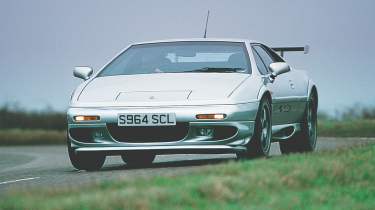
If you think the Nissan GT-R hung around for a while (15 years), or even the Lotus Elise (25 years), then the Esprit topped them both, its 1976 to 2004 span covering 28 years. Impressively, Lotus kept it relevant the entire time, from its wedgy 70s beginnings to the true supercar it became with the punchy Sport 300 and then the ultimate Esprit, the 3.5-litre, 349bhp twin-turbo V8-powered Sport 350. Already a master of mid-engined handling, the 350 looked and felt more aggressive, suiting a burgeoning cohort of people taking their cars on track – though Lotus built only 50 examples of its most extreme Esprit.
Lotus Evora
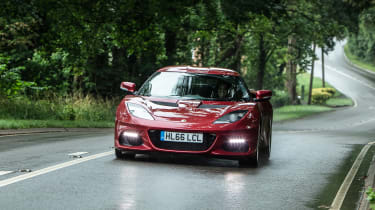
Nothing less than 2009’s evo Car of the year winner, the Evora was, and still is despite ending production in 2021, a great Lotus and a great driver’s car. That early eCoty winner seems surprisingly modest by today’s standards, its Toyota-sourced 3.5-litre V6 making ‘only’ 276bhp, one of the least powerful victors ever. But we all know better by now that power isn’t everything, especially in a Lotus, and while the Evora did gain a supercharger and bigger numbers as the years went on, the beautifully detailed steering, expansive and cab-forward view through the windscreen, and deft, well-controlled ride remained a constant. It still looks good too, we reckon – less exotic but more individualistic than the Emira that replaced it.
Lotus Exige
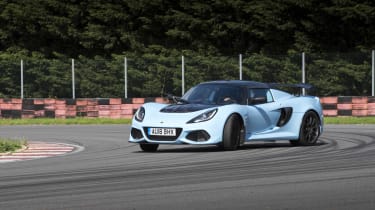
The Exige is another Lotus that evolved over the years, but we’re going for the original ‘S1’ version here, for its true road-racer feel. Barely heavier than the Elise it was so obviously based on, the 780kg Exige featured wings and splitters capable of generating 100kg of downforce at 100mph, and a roof to really pin you in with the feral noises produced by the two Rover K-series powerplants – one with 177bhp, the other 192bhp. The Exige added racer-style brutality to the all-encompassing Elise experience.
McLaren Artura
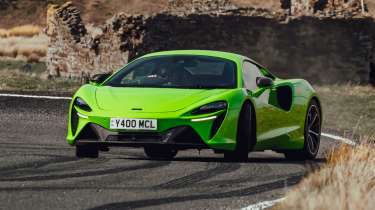
In some ways McLaren deserved the pain it went through in bringing out the Artura. It shouldn’t have gone so early with the car quite so unfinished. But as is often the way with these things, thanks to tweaks and iteration, it’s become perhaps the finest supercar of its type and one that does represent the best of what Britain is capable of.
It’s a marvel of engineering, incorporating the batteries and motor that inform its status as a plug-in hybrid while maintaining a kerb weight under 1500kg. But cold hard figures don’t capture the Artura’s magic. That’s revealed once you drive it. Here is a tactile, responsive, balanced and biddable supercar that for all its technical prowess and its 700bhp, calls Lotus to mind in terms of dynamic acumen.
McLaren 600LT
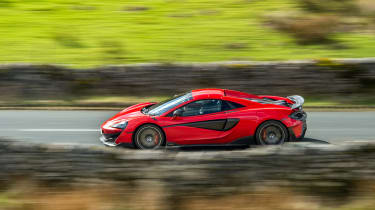
And now begins a string of McLarens to add to the F1, P1, and 750S further up. We make no apologies: McLaren consistently turns out some of the world’s best supercars, and the 600LT is a five-star favourite and our 2018 Car of the Year – ‘poise, power, and purity – McLaren at its best’ is the succinct subheading for our 600LT review. Based on the 570S, the flame-spitting 600LT is to that car as the Exige is to the Elise, honed in every dynamic area for a more intense experience, and McLaren managed to shed 84kg from the 570’s weight too – 21kg from the seats alone, thanks to the Senna-style buckets.
McLaren 620R
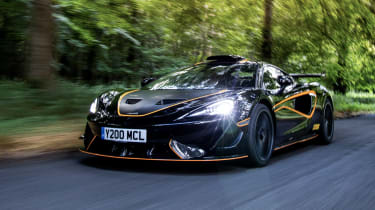
You might have forgotten this one in McLaren’s ever-evolving lineup, but we haven’t. The 620R was essentially a road-going version of the brand’s 570S GT4 racer, and McLaren made only 225 of them – for about quarter of a million quid a pop. A lot beside a 570S (or a lightly-used 720S) but it expertly blurred the line between racing and road, being great fun (and obviously very quick) on track, but still fun and exciting on the public highway – helped by usual McLaren high points like richly textured steering feel and the tactile click of the DCT’s paddle shifts.
McLaren 650S
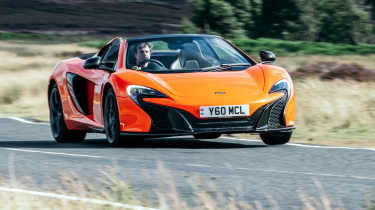
The earliest examples of the 650S are now more than a decade old, but you wouldn’t know it from the way it drives. The 650S felt like McLaren getting into its stride, with a little more (if not yet all) of the character that its 12C predecessor arguably lacked, and dynamic refinements that set the company on the path followed by all its subsequent supercars. Of course performance took a step upwards too, and while subsequent McLarens have been faster still, you’d be hard-pressed to say the 650S was ever lacking in its straight line speed or cornering abilities…
McLaren 675LT
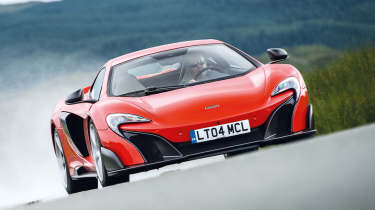
The 675LT narrowly missed out on an evo Car of the Year victory when it finished second to the original Cayman GT4 in 2015. It remains one of our favourite McLarens, with a familiar formula. The “LT” for Long Tail moniker has always seemed a little optimistic, given only millimetres separate these enhanced variants from the cars they’re based on (in this case, the 650S above), but philosophically the gap is much greater – the 675LT showed that McLaren could do raw fun and emotion as well as just staggering speed. Plenty of that too, obviously – in fact, we reckoned it’d give the McLaren P1 a hard time, which maybe wasn’t surprising when the P1 had donated so many parts.
McLaren 765LT
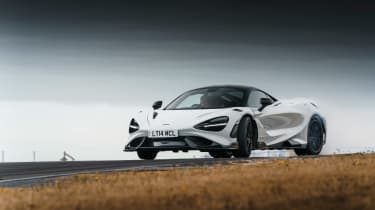
Yup, another LT, this one based on the 720S, and another that came within a whisker of an eCoty win, this time in 2020 (when the BMW M2 CS was the victor). The 765LT was a little longer-tailed than most too, with a striking aero kit that gave the curvy 720S shape a bit of grit. The formula stayed the same though: a little faster (thanks to 755bhp) and more intense absolutely everywhere (especially when it rained during eCoty), but losing none of the feel and sense of occasion we love about McLarens; its steering remains a high point, up there with the best modern cars full stop.
Mini John Cooper Works GP
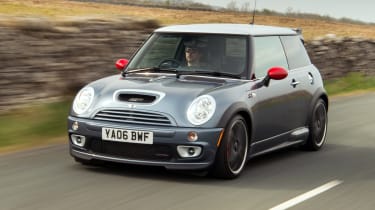
Now becoming as much a collector car as an enthusiast’s one, the original “Mini Works GP” is one of our favourite noughties hot hatches. The regular Mini was already great – compact, tactile, adjustable, but feeling like a quality product. Binning the back seats for a big strut brace, tweaking the supercharged 1.6 for 215bhp, and swapping out wheels and suspension parts for lightweight alternatives gave it the feel of a front-drive BMW M-car, and it doesn’t look as OTT as it used to. It was fluid and fun, and predated the similar ethos of the Megane R26.R by a couple of years.
Mini John Cooper Works GP2
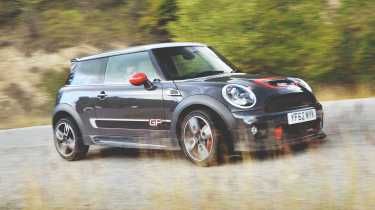
You won’t find the third-generation Works GP here, because it was a bit of a nail frankly, all torque steer, rigid ride and no finesse. But the second-generation R56 Works GP, based on the R56 Mini, showed the GP recipe could stand a little extra spice without overdoing things. Now turbocharged it made the same 215bhp as the previous car, but was a little stiffer and more aggressive, and with sticky Kumho rubber it was a riot in the corners while retaining just enough civility for regular use (though still no back seats). Unlike its successor, you still got a snappy manual gearshift to play with, too.
Range Rover
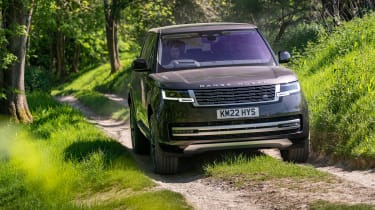
A Range Rover might not seem especially evo, and it’s true that this two-tonne-plus behemoth designed to insulate you from the road rather than connect you to it is not what you’d call a thrilling driving machine. But it’s what you might call the perfect counterpoint car, a vehicle so far removed from the Caterhams and hot hatches that it perfectly complements their ownership. That it can easily tow your average trackday toy also makes it rather useful, and don’t think that just because it’s not exciting, it’s not good to drive – far from it. Piloting a Rangie is always an experience, they’re pretty powerful these days, and it’s a lot classier than most house-sized SUVs.
Range Rover Sport SV
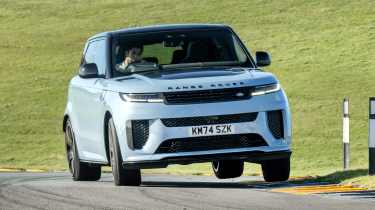
The last couple of generations of Range Rover Sport have been granted a special performance version, and the Sport SV is the best yet. Where its SVR predecessor was fun but disquietingly obnoxious, the SV is a welcome few steps closer to trad Range Rover class, but still packed with deeply impressive engineering that somehow turns it into a genuine driver’s car. It’s no exaggeration to say that having driven it on track, the SV doesn’t feel out of its depth; it’ll pull 1.2g on a Michelin Pilot 5 S, for Pete’s sake. The 625bhp BMW-supplied V8 is mighty too, as are the carbon-ceramic brakes, yet it turns back into a proper luxury car on the road.
Rolls-Royce Ghost
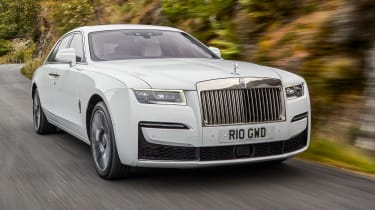
More so even than the Range Rover further up, the Ghost strays quite far away from evo’s usual idea of a driver’s car. Yet again, that doesn’t mean we don’t like driving it, which is a sign of how well-honed a modern Rolls-Royce has become. Its ability to dismiss the surface beneath is as impressive in its own way as a 911 GT3’s ability to shrug off the Foxhole at the Nurburgring, while the 6.7-litre twin-turbo V12 defines “effortless”. That said, the brand’s recent move into EVs with the Spectre suggests that, of all cars, its successor could be even better with electric power.
Rolls-Royce Phantom
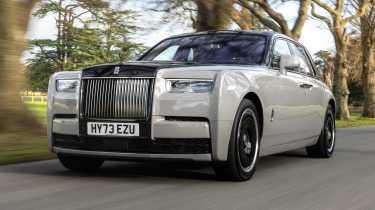
We’re opting for the Phantom VII here, 2003’s magnificent, opulent and imposing luxury saloon that has defined the brand’s direction for the 21st century. It showed that, like Mini, an iconic British brand was in good hands at BMW, and that finally furnished with the budget they lacked in preceding decades, the British engineers behind it could still turn out a world-beating product. Obviously, the Phantom was quite remarkable to drive – a capable handler, but really all about its ride and isolation. Unsurprisingly, never an eCoty entrant, but that doesn’t make it any less significant.
TVR Griffith
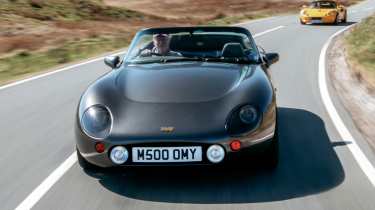
Obviously we’re talking about the brilliant 1990 to 2002 original here rather than the embarrassing on-again off-again project mooted way back in 2017. The original is an all-time classic British sports car: great to look at, powered by an amusingly vocal Rover V8, wickedly fast thanks to weighing barely more than a Mazda MX-5 (dry, at least), and actually, bloody brilliant to drive. Yes, a Griff can be a bit of a workout, but the rewards are always there. Decades of knowledge can even make them pretty reliable these days - it’s no surprise the Griffith remains in high demand on the used market. We recently included the Griff on our 1990s evo “eras” test; it right up there with the Porsche 996, Subaru Impreza, and Lotus Elise as one of the era’s most notable driver’s cars.
TVR Tuscan
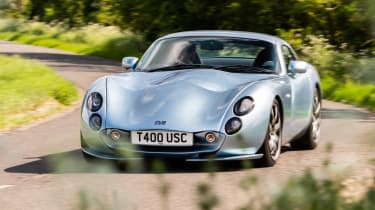
The Tuscan carried TVR into the 2000s, and what a car it was. The styling is still a stand-out today – surely one of the all-time great profiles – but motivated by TVR’s in-house “Speed Six” inline six-cylinder (upwards of 360bhp from four litres) it’s a riot to drive, scaring contemporary supercars in a straight line, making a BMW M-car straight six sound like a hairdryer, and changing in character throughout the rev range. Yet the Tuscan also handled. Accept there’s nothing to save you if you get it wrong, and you’ll find sharp steering, sweet balance and plenty of adjustability – better in later cars, as early ones were a little soft.